Nvidia Wants to Put a Data Center on Your Patio
Listen to the audio version of this article (generated by AI).
Sixteen Nvidia (NVDA) AI chips mounted on the exterior wall of a suburban tract home in Phoenix.
That’s the partnership NVDA, smart-panel startup Span, and homebuilder PulteGroup (PHM) recently unveiled.
The pitch: The average U.S. home runs at only about 40% of peak electrical capacity. So Span’s panels will act as a mini data center running AI computing tasks outside your home. In exchange, you’d get discounted electricity and Wi-Fi.
A 100-home pilot program is planned for this fall. Eventually, the partnership wants to establish a small city’s worth of processing power by next year.
The deal is small. A 100-home pilot program is a rounding error against NVDA’s $216 billion in annual revenue.
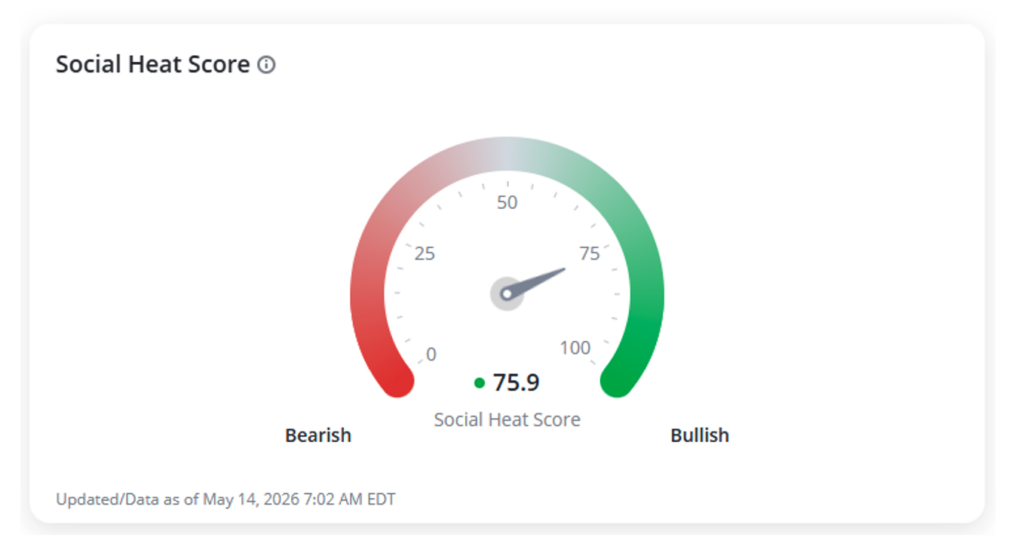
And we should note our Social Heat Score – which tracks real online activity across forums, podcasts, and developer communities to flag momentum before Wall Street does – puts Nvidia at 76 out of 100. Anything above 60 is bullish.
But everyone already knows Nvidia. The more interesting question is who else could win from this radical new data center model…
Behind Every Nvidia Chip, There’s a Supply Chain Worth Watching
Nvidia doesn’t mount the wall panels, build the services, or wire the houses for these new mini data centers. They just sell the chips.
So if this home data center model scales, a handful of companies sitting quietly in its supply chain are about to get a lot of attention.
And our Social Heat Score will surface them first.
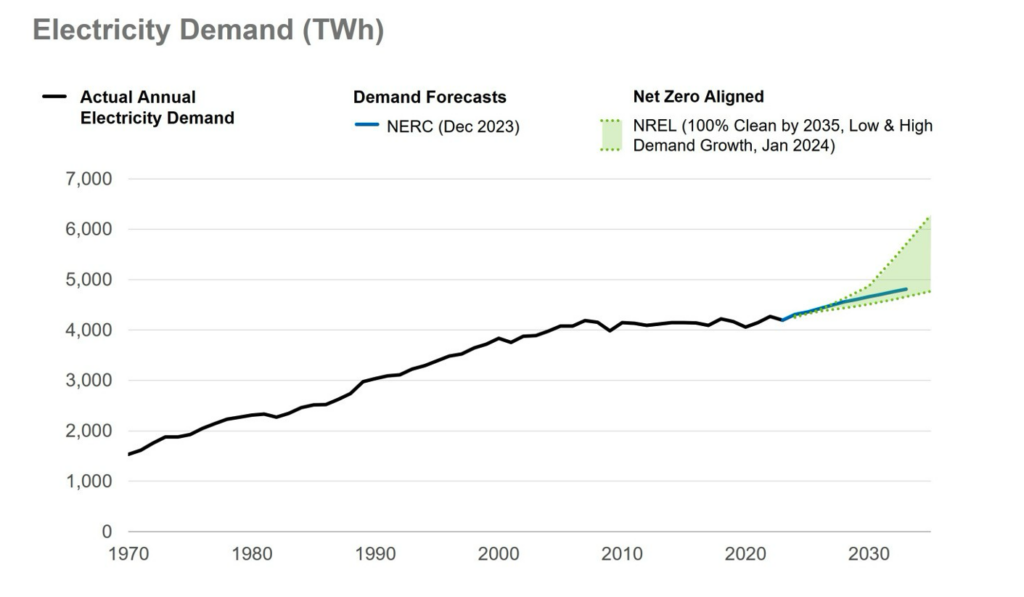
U.S. data center electricity use is projected to climb from about 4% of national consumption in 2024 to over 9% by 2030, and that’s only achievable if new compute shows up where the grid already has slack.
Traditional data centers take years to permit and billions to build. Span’s model sidesteps all of that.
And as the home data center model scales, these are the companies that get pulled along with it.
Five Under-the-Radar Plays on the Suburban AI Buildout
The Homebuilders: PulteGroup (PHM), Lennar (LEN), D.R. Horton (DHI)
Think about what Nvidia actually needs to scale a distributed home compute network: permits, land, and homes already under construction.
PulteGroup has all of it – 1,043 active communities across more than 45 markets nationwide. That’s why they’re the launch partner. Span claims it can deploy 8,000 of these wall-mounted compute nodes – what it calls XFRA units – six times faster, and at one-fifth the cost, of a comparable 100-megawatt centralized data center.
If that math holds up, PulteGroup isn’t a homebuilder dabbling in tech. It becomes a critical link in the AI infrastructure chain – one that already has the permits, the land, and the freshly poured slabs.
Lennar and D.R. Horton are more speculative – no direct tie to the buildout. Yet. But these are two of the largest homebuilders in the country – and together they’re not just bigger than PulteGroup, they’re in a different weight class.
Lennar alone operates 1,678 active communities. D.R. Horton’s community count is up 12% year over year.
That’s the distribution footprint that makes both companies so interesting if the Span model proves out this summer – the more homes in the ground, the more homes get wired.
Homebuilders aren’t the kind of companies our Social Heat Score typically flags – consumer buzz around PHM, LEN, and DHI is pretty quiet. But that’s almost the point. The Span partnership is a fundamental shift that no sentiment tracker will catch in advance. This one you have to see coming.
The Server Inside Every Unit: Dell (DELL)
Every one of those units runs on a Dell PowerEdge server – 16 of Nvidia’s latest AI chips packed into each. Dell doesn’t just ship the hardware; it’s embedded at the foundation of this entire model.
And this deal is just one thread in a much bigger story. In fiscal 2026, Dell recorded more than $64 billion in AI-optimized server orders and is guiding for roughly $50 billion in AI server sales in fiscal 2027 alone. It exited the year with a $43 billion backlog. The demand is not slowing down.
Dell’s Social Heat Score sits at 59.8 out of 100 – just a hair below our 60-point bullish threshold. We’re watching it closely.
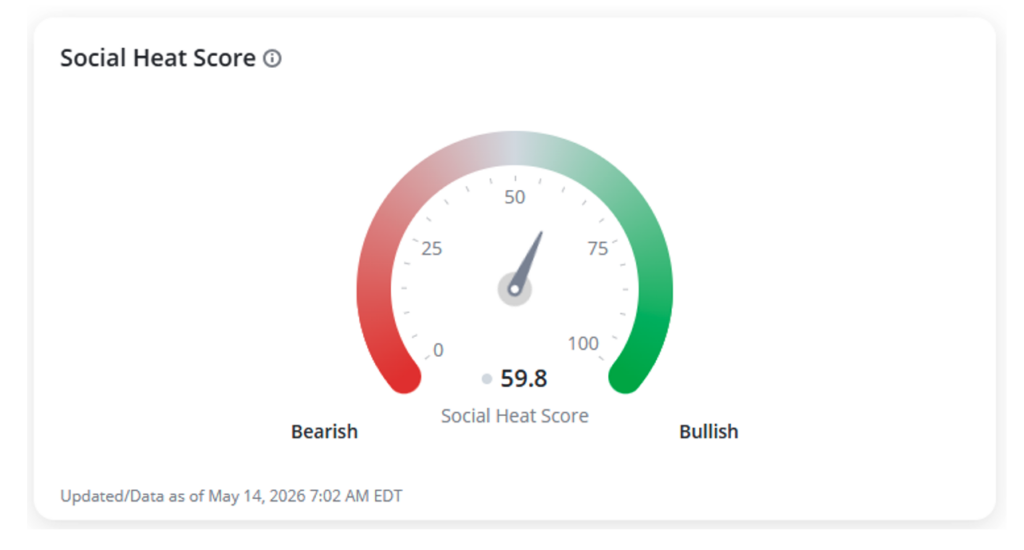
A sustained move above 60 would signal that the broader market is catching on to what the data already suggests. That’s when this one gets a lot more interesting.
The Power Behind Every Wall: Eaton (ETN)
Eaton makes the electrical infrastructure that every one of these units needs – power distribution, battery backup, cooling systems. Whether AI compute centralizes in a large-scale data center or distributes across 10,000 suburban homes, Eaton sits in the power path either way. The more the model spreads out, the more homes Eaton powers.
The numbers are already moving. In Q1 2026, Eaton posted record revenue of $7.5 billion – up 17% year over year. Data center orders inside its Electrical Americas segment surged 240%. Data center revenue jumped 50%.
The company raised full-year guidance and its CEO said on the earnings call: “We are winning business at unprecedented rates.”
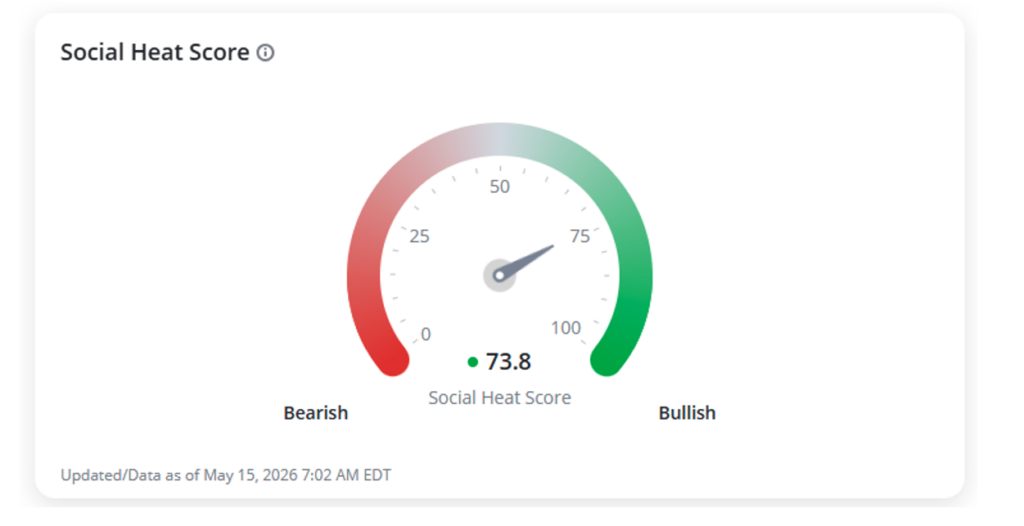
ETN’s Social Heat Score: 73 out of 100. Deep in bullish territory, and the fundamentals are confirming what the data already said.
Bottom Line: The Next Data Center Is Already Being Built – One Suburb at a Time
AI keeps showing up in unexpected corners of the economy. This week it showed up on the side of a tract home in Phoenix, carrying Nvidia’s name and running on a Dell server.
Sounds a little unsettling? Maybe. Not every homeowner is going to want a mini data center bolted to their wall. But enough will – especially when discounted electricity and free Wi-Fi are part of the deal. That’s why this pilot exists. And if even a fraction of PulteGroup’s 1,043 communities sign on, the scale gets interesting fast.
This is exactly the kind of opportunity our data is built to find early. Last year it was AMD – a stock most investors had written off in the AI chip race.
While Wall Street saw it as a distant second, our data saw developer activity exploding, enterprise demand accelerating, consumer attention climbing. By May 2026, AMD had tripled – and we exited for a gain of +227% in under a year.
MegaTrends member Geri J. walked away with a 228% profit – $8,233. Matt E. is still holding, up roughly $65,000. Nicholas M. booked 209%, about $10,000.
Those aren’t hypothetical gains – they’re real people who trusted the data. And AMD is just one example.
The same Social Heat Score signal has led us to a health insurance disruptor up 43% in a year. An AI-powered home insurance play up 22% in less than a year. A company making the cables that keep AI data centers running – up 27% in 2026 alone.
None of those looked like AI stocks on the surface. That’s the point.
Our stock-picking system doesn’t care what sector a company calls home. It just follows the momentum – and flags it the moment it shows up. MegaTrends members get real-time Social Heat Scores on nearly 600 stocks – and new names added all the time.
To see what’s lighting up the board right now, including our full model portfolio, click here to join.
Until next time,

Andy Swan
Founder, LikeFolio