Listen to the audio version of this article (generated by AI).
Michael’s Note: Next Monday, Keith is unveiling the biggest leap forward in TradeSmith’s history… something he’s calling Day One. You can join him for the big reveal right here.
Then read on to find out what 20 pilots lost in the clouds can teach you about keeping your bearings in this whipsawing market… and why that’s what Day One is all about.
Pilots call it the graveyard spiral.
It happens when you fly into a cloud and lose sight of the horizon. Your body tells you you’re flying straight and level. But in fact, you’re in a slow turn, losing altitude… and the turn keeps tightening.
In 1954, researchers at the University of Illinois set out to escape it. First, they measured how quickly it could happen.
They took 20 pilots who’d never been trained to fly by instruments. One at a time, they flew them into conditions in a simulation where they couldn’t see the ground or the horizon… just clouds in every direction.
Every one of them lost control of the plane. On average, it took less than three minutes.
These weren’t bad pilots. On a clear day, they flew just fine. But in the clouds, your senses start lying to you. You can be turning and feel like you’re flying straight. You can be diving and feel like you’re climbing.
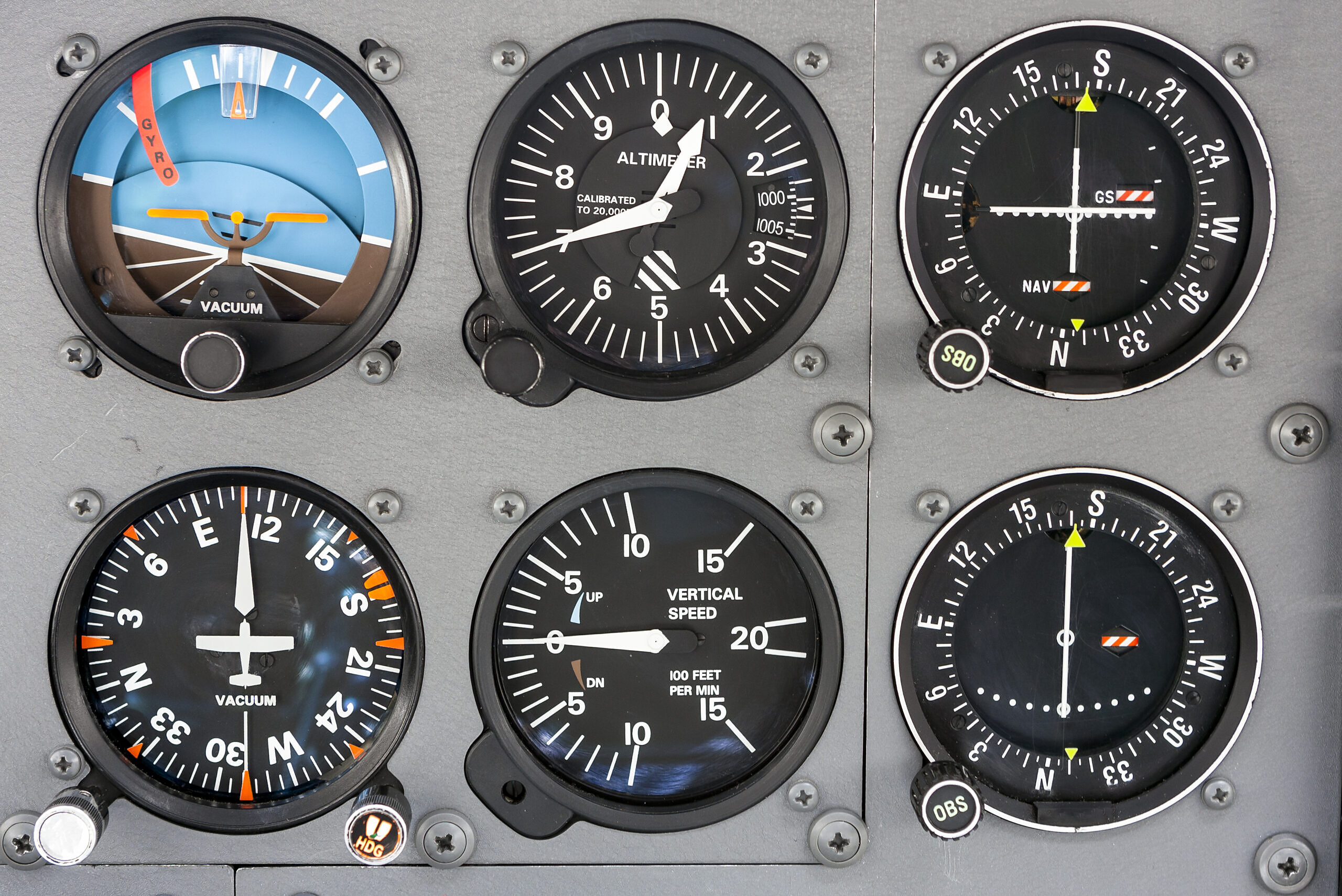
What saves you is the instrument panel. It doesn’t get dizzy. It just tells you where you really are.
If you’ve been watching the market lately, you know what it’s like to not see clearly. One week the headlines say AI stocks are crashing. The next, they’re soaring. It’s easy to lose your bearings.
Investors have their own version of the graveyard spiral.
Each move feels sensible at the time. You sell when the news looks grim, which is usually after prices have already fallen. Then you buy back in when the news looks rosy… which is usually after they’ve already bounced. Each move takes you a little further off course.
Wall Street’s biggest firms don’t fly that way.
These days, most of the buying and selling in U.S. stocks is done by computer programs, not people.
Those programs don’t panic when the market drops. They just read the data and act on it.
And the biggest players are racing to make them even smarter. Two Sigma, a hedge fund that manages about $60 billion, has been open about using AI. So has Citadel.
That’s a big part of why, on Monday, Nov. 30, I’m going to unveil something I’ve been working toward for almost 10 years. I’m calling it Day One.
It’s the next evolution of TradeSmith. And it’s the reason I’m not worried about this market. Not for you, and not for your fellow TradeSmith members.
To understand why, it helps to know what happened to those 20 pilots next.
Instrument Training
After that first flight, the researchers gave the same pilots about two hours of instrument training. Nothing fancy. Just how to read a few dials and trust them over their own senses.
Then they flew them back into the cloud in the flight simulator.
This time, the pilots ran through 60 tests between them. Fifty-nine were completely successful.
Same pilots. Same clouds. The only difference was that now they knew how to use and trust the instruments.
That’s why I’m not worried. You don’t need to be a hedge fund to come through a market like this one. You don’t need a supercomputer, a team of data scientists, or a degree in programming.
You need the right instruments… and a better way of using them.
For years, TradeSmith has been building instruments for investors like you. Each one tells you something different about a stock: whether its trend is healthy, the time of year when it tends to do best, where our AI thinks it’s headed next, and more.
Each one is powerful on its own. But if you wanted to know what several of them said about the same stock, you had to check them one at a time and do the cross-checking yourself.
On Day One, that changes.
You’re the Software Engineer Now
You’ll be able to cross-check them all at a glance… and even build new ones.
For 20 years, our engineers decided what you’d see when you logged in to TradeSmith. On Day One, you decide what you see. You pick the instruments that matter to you, put them where you want them, and build the panel that fits the way you invest.
One Day One, you become the software engineer.
I know how that sounds. But I’m serious. And you won’t have to write a single line of code.
From then on, you’re the one in charge.
I’ll tell you more at my Day One demo on Monday, Nov. 30, at 10 a.m. ET.
Those 20 pilots didn’t need to become better pilots. They just needed to see where they really were.
That’s what my demo is all about: seeing clearly, even when the market doesn’t make it easy.
All the best,
Keith Kaplan
CEO, TradeSmith