Perfect Storm: The Top 3 Shadow Threats Ready to Crash the Stock Market in 2024
Global markets today face challenges capable of disrupting one of the greatest bull markets in history: up nearly 135% from the 2020 lows.
Black Swan events typically come out of nowhere, catching everyone flat-footed.
This year, things are a bit different.
You see, we already know where the trouble spots are.
- The Middle East is on the precipice of World War III, with proxies attacking ships in the Mediterranean, disrupting critical energy supply chains.
- Ukraine is on the brink of losing its land and sovereignty, locked in a geopolitical chess game with Russia, capable of upending European and global food security.
- And ungoverned artificial intelligence, where rapid advancements outpace policy, increases the likelihood of disinformation impacting markets and politics with new capabilities developed by nefarious actors.
These aren’t distant threats… they’re today’s reality.
Yet, most folks remain willfully ignorant of the dangers right in front of them.
It feels like déjà vu, reminiscent of the early whispers of Covid-19 in December 2019, when everyone knew a storm was coming, but had no idea how to prepare.
Let’s make this time different.
This report shows you how to leverage the power of Trade360 to:
- Identify the signals shaping these threats
- Assess their potential impact on your investment portfolio
- Implement proactive strategies to safeguard your assets and exploit opportunities.
Let’s start with the most pressing issue, the conflict in the Middle East.
The Middle East on the Brink
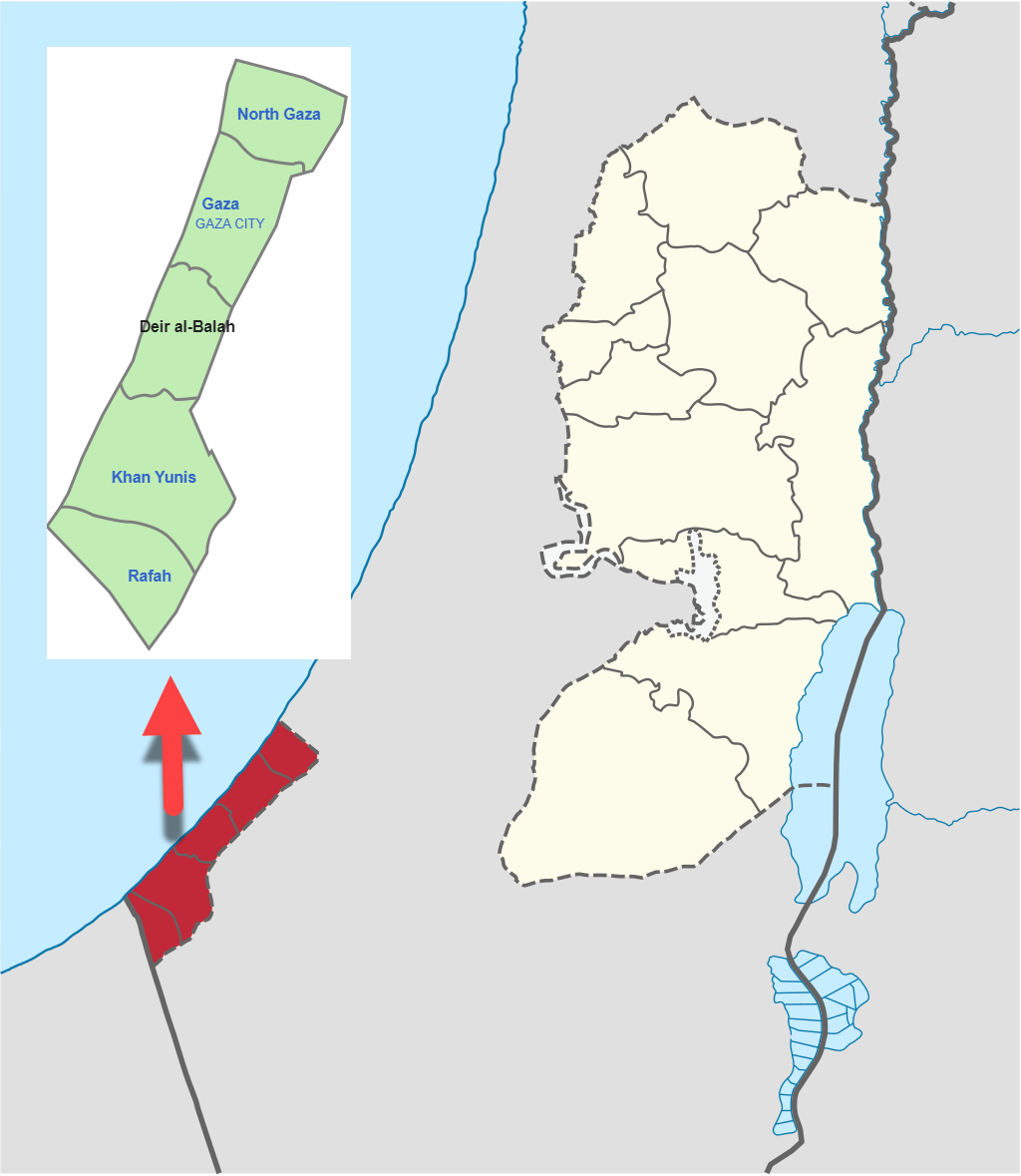
For centuries, cities, states, nations, races, and religions have all vied for a foothold in the Middle East.
Today’s war centers on Israel and Hamas. Yet, it’s quickly pulling global powers like the U.S. into a direct conflict with Iran and its allies.
How it Started
Israeli forces and settlements existed in the Gaza Strip until 2005 when Israel unilaterally pulled out of the region.
The following year, Hamas, a group designated as terrorists by the U.S. government, won governmental elections and has retained power since.
On Oct. 7, 2023, Hamas operatives invaded Israel, attacking and killing 1,200 people in Israeli cities and settlements and returning to Gaza with several hundred hostages.
Israel’s government parties immediately coalesced around plans to retrieve those hostages, some with dual citizenry, and eradicate Hamas.
Because Gaza is one of the most densely populated and poorest places on Earth, the resulting incursion has left tens of thousands dead – including a high number of civilians – and largely destroyed the area’s infrastructure.
The U.S., a staunch ally of Israel since its founding, started by offering unconditional support.
Iran, a perpetual antagonist of the West since the 1979 revolution, saw an opportunity to exacerbate the situation for political gain.
Israel’s efforts to root out Hamas and destroy its network of tunnels in such a dense area led to a higher number of civilian casualties than many felt appropriate or could stomach.
The size and scope of the devastation in Gaza led many countries, especially ones with Arab ties or former colonies like South Africa, to condemn Israel’s actions as heavy-handed, with accusations of outright genocide.
Dilemma
Global opinion has turned decidedly against Israel, with President Joe Biden and many congressmen openly discussing conditioning Israeli military aid, pushing for a ceasefire.
Yet, Iranian attacks on Israel have been thwarted by joint efforts from the U.S., Israel, Saudi Arabia, Jordan, and Egypt – not a coalition you’d expect.
Hezbollah, which is also designated as a terrorist group by the U.S., uses the conflict to justify attacks on Israel.
Yemen Houthi rebels have used the war as a pretext to attack any cargo ship in the Mediterranean Sea, resulting in many sailing around the Horn of Africa, creating longer lead times and higher costs.
It’s a situation with no immediate peaceful conclusion that risks dragging out for years or even escalating into a full-blown war.
As evidence, there hasn’t been a consensus among the U.S., Israel, or any other world leaders on what a post-conflict Gaza should look like.
And with Israeli Prime Minister Benjamin Netanyahu’s fragile governing coalition showing cracks, many fear a more catastrophic conflict is inevitable.
Using Trade360 to Navigate the Middle East Crisis
We do not suggest that there is any way to forecast when a catalytic event might occur, any more than any other black swan event.
However, we can adjust our portfolios to reduce specific event risks and monitor the situation using TradeSmith tools.
Consider the following idea…
You expect oil prices to rise. However, if equity markets collapse, nothing will be spared.
So, how do you plan and execute this strategy?
Suppose you want exposure to oil and gas exploration and production companies since they outperform when energy prices rise.
But, we need to hedge broader market risk.
TradeSmith’s screener is a great place to start looking for exploration and production stocks.
In the example below, we set up the screener to look for stocks in this specific industry, with other parameters to ensure we get companies of decent size.
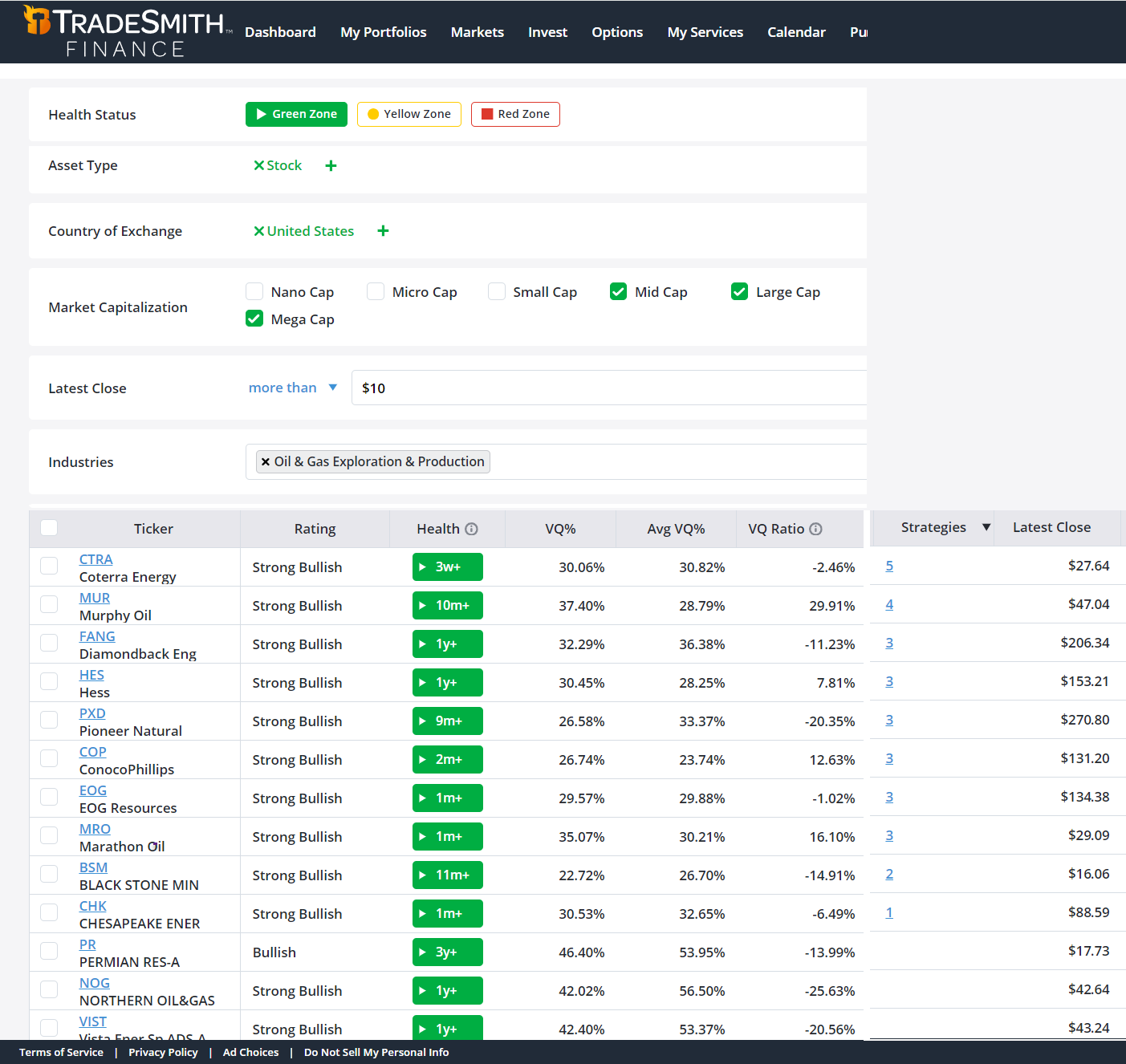
Let’s zoom in on the opportunity listed in the first two rows

These two stocks are high-conviction selections, appearing on at least four strategies.
However, the second one has a high Volatility Quotient% ratio, meaning its current volatility quotient is much higher than its average.
That’s probably why one-year returns are double that of the top one.
However, if we want to gain exposure to an industry while reducing risk, the first stock, Coterra Energy, might be the better bet.
This example shows how to locate stocks with specific exposure to higher oil prices.
Now that we’ve looked at the Middle East, let’s turn our sights a bit further north.
A Partitioned Ukraine and the Global Fallout
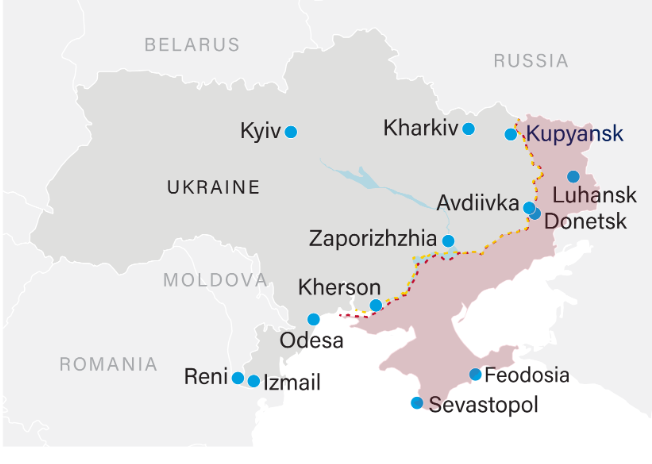
In February 2022, Russia invaded Ukraine under false pretexts.
Unlike the Israel-Hamas war, few nations didn’t rally or at least offer support to Ukraine.
Yet, as the war enters its third year, there appears to be no end in sight.
Despite the valiant efforts of Ukrainian forces and the support of Western allies, Russia’s willingness to send soldiers and resources to the front lines has allowed them to stall last year’s spring offensive and begin to make gains in key regions.
Ukraine faces mounting challenges in manpower and weapons production, struggling to keep pace with the demands of the war.
Moreover, there are signs of a waning appetite in the U.S. in favor of domestic priorities like immigration.
As the conflict drags on and the costs mount, public opinion has begun to shift, with growing calls for a diplomatic resolution.
Implications of a De Facto Partitioned Ukraine
The prospect of a de facto partitioned Ukraine seems more likely than ever. It would likely fall along the current front, which has remained largely unchanged for the past two years.
It would be a larger extension of the detente reached after Russia invaded Crimea in 2014.
Such an outcome would have far-reaching consequences for regional stability and global security.
The Black Sea, a vital trade route and strategic waterway, would be at risk. Given Ukraine’s role as one of the world’s largest grain exporters, this strategic shift could worsen global food security.
Importantly, the potential for NATO involvement, should tensions escalate further, cannot be discounted.
Finland joining the alliance creates a tension reminiscent of the Cold War.
Yet, a partitioned Ukraine would upset the geopolitical landscape.
Western support for Ukraine, already strained, could diminish further, leading to a rift in the transatlantic alliance.
The U.S., in particular, may see its credibility on the world stage decline, emboldening rogue states to pursue their agendas. European countries focused on their security, wary of a mercurial U.S. Congress or administration, may also isolate it economically and politically.
Identifying Opportunities and Risks with Trade360
Regardless of how this resolves, there’s no doubt that defense and cybersecurity firms stand to benefit.
Today’s wars are being fought online and from afar.
Therefore, it makes sense that these stocks would be ideal investments over the next several years.
While defense stocks tend to have established business models, cybersecurity firms are high-growth, and some have yet to generate positive cash flow.
So, we need to calibrate our stock screener to account for this.
That’s where the Business Quality Score (BQS) comes into play.
The BQS rates a company based on growth, profitability, safety, and payout.
When we add in these criteria and search for cybersecurity firms, we get the following results:
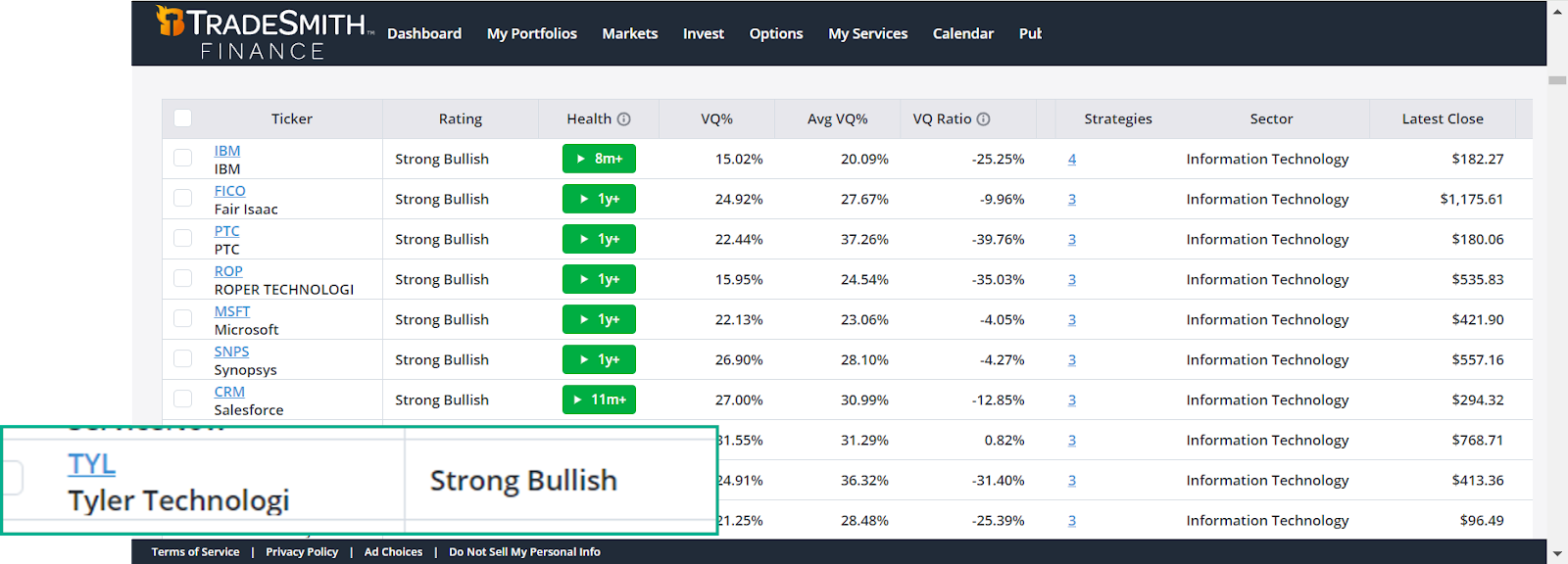
In this list, Tyler Technologies comes up given its BQS of 74.
It also qualifies for three TradeSmith strategies: Money Movers Up, Sector Select, and Growth.
Since cybersecurity isn’t a specific industry, we have to examine each ticker’s Company Profile – easily accessible inside your Trade360 subscription – to find ones that fit.
We can repeat this process to find a basket of stocks that fit our search parameters. And if none of them are where we want them yet, that’s OK.
We can create a custom watchlist with alerts to track them until they hit the buy prices we’re looking for.
So far, we’ve discussed fairly traditional problems that could add uncertainty to markets.
But our last one is so new that few understand the dangers.
Ungoverned A.I.
Artificial intelligence (A.I.) is evolving at an unprecedented pace.
Breakthroughs in machine learning, natural language processing, and other key areas are outpacing governance efforts.
The rapid development has left regulators, policymakers, and even companies struggling to keep up, resulting in a lack of adequate regulation and control.
Just look at the fight at OpenAI between Sam Altman and the board over the speed at which the company is pressing forward with generative A.I.
This regulatory gap has created an environment where A.I. systems are being deployed without sufficient oversight or accountability.
The potential consequences of this ungoverned A.I. landscape are becoming increasingly apparent as we move through 2024.
Risks Posed by Ungoverned A.I. in 2024
Remember how everyone talked about fake news impacting the 2016 election?
That’s nothing compared to what’s to come.
One of the most significant risks posed by ungoverned A.I. is the potential for A.I.-generated disinformation to influence elections and geopolitical conflicts.
As A.I. systems become more sophisticated, they can create convincing fake news articles, deepfake videos, and social media posts that are difficult to distinguish from genuine content.
This isn’t some hypothetical either. Rogue and organized malicious actors actively try to manipulate public opinion, sow discord, and undermine democratic processes.
And even well-intentioned A.I. projects could go awry if not properly managed, resulting in significant harm. For instance, a lawyer relied on ChatGPT to prepare his court case and ended up citing fictional cases that made him look like a fool.
That’s embarrassing and poses an individual reputational risk, but not life-threatening.
But imagine A.I. systems embedded into our infrastructure: traffic control systems, financial markets, defense systems, and more.
What happens when A.I. fails in any one of these instances?
The consequences could be catastrophic.
Leveraging Trade360 for A.I.-Related Investments
Despite the risks, the A.I. revolution also presents significant investment opportunities.
Trade360 offers powerful tools to help investors navigate this complex landscape and identify promising A.I.-related investments.
The tough part is knowing who’s going to come out on top.
A century ago, there were 3,000 car companies. Not even 20 years later, the industry consolidated to just a few players.
Trying to research all the possibilities is difficult under the best of circumstances.
But, there’s an easier way to sift through the noise and find the top trades.
The Billionaire’s Club feature, available inside your subscription, allows users to track the moves of top investors and hedge funds, providing valuable insights into which A.I. and tech stocks are attracting interest from savvy market participants.
By following the lead of successful investors, users can gain exposure to cutting-edge A.I. companies with strong growth potential.
A quick scan of technology stocks owned by billionaire hedge funds comes up with the following:

Qualcomm (QCOM) and Taiwan Semiconductor (TSM) are popular microprocessor stocks heavily involved in making A.I. chips.
Further down the list, IBM has invested in A.I. for its Watson data analytics systems.
At the same time, managing risk exposure is crucial in this rapidly evolving space; we don’t want to go overboard loading up on only tech stocks.
A great way to check yourself is via the Analyze Portfolio page on your Trade360 My Portfolios page, where you can see a high-level analysis of your portfolio(s) at a glance.
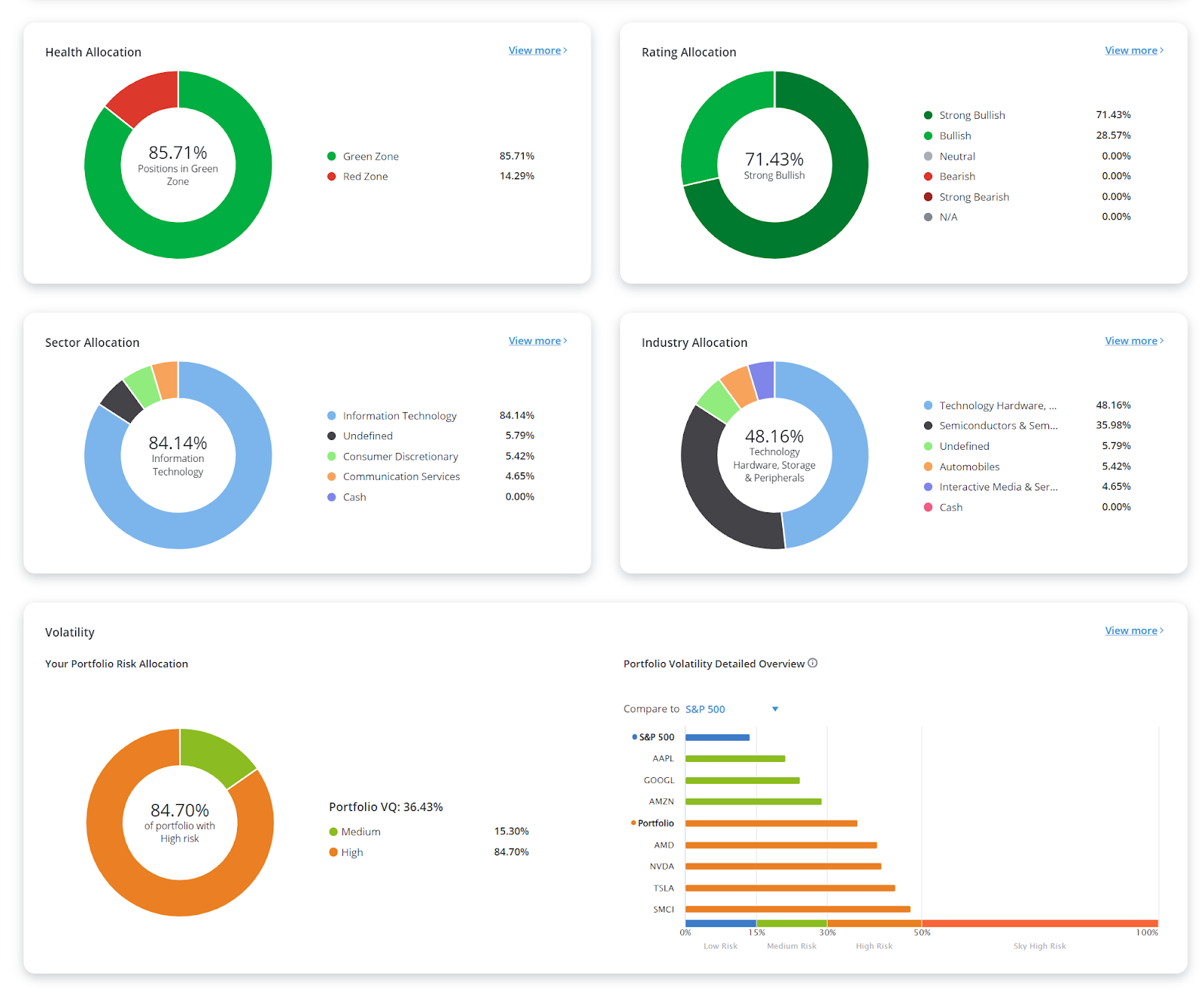
In this example portfolio, we find that although most of these stocks are healthy and bullish, they also carry high volatility and are heavily weighted toward the Information Technology sector.
Therefore, it might make sense to reduce risk by using Trade360’s Risk Rebalancer.
With just a few clicks, we can reduce our overall portfolio Volatility Quotient from 36.43% to 28.28%.
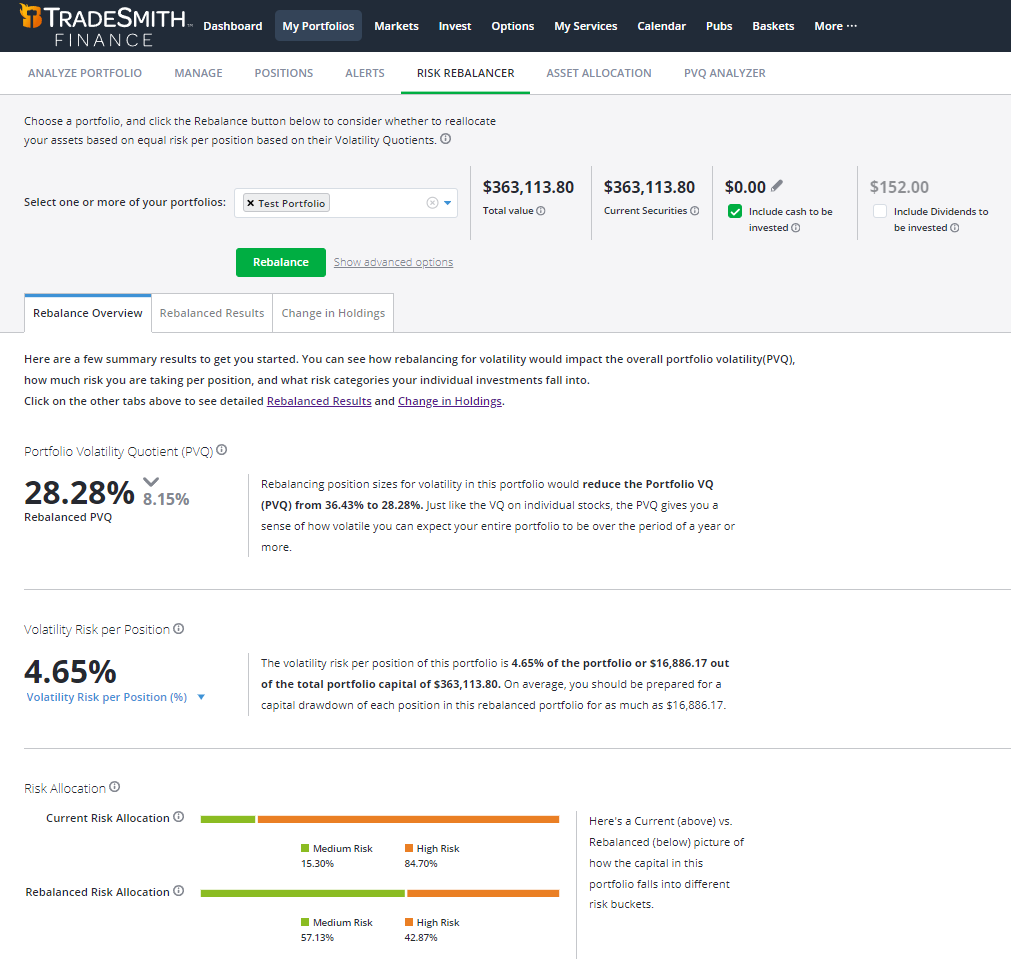
At the bottom, you can see how the portfolio’s medium risk percentage rose from 15.3% to 57.1%.
This doesn’t change the stocks in the portfolio. It just shows you how to reallocate the percentage of capital towards each stock for equal risk per position.
Final Thoughts
TradeSmith’s tools can help you monitor, analyze, and take action, whether it’s preparing for these three possible threats or others.
The more you familiarize yourself with the tools, the better you’ll be able to leverage them to make smart decisions.
Take some time to explore the dashboard and all the features and tools available to you inside your Trade360 subscription. As always, you can reach out to our friendly, U.S.-based Customer Success team anytime. They are ready to answer any question you have about the tools from Monday through Friday from 9 a.m. to 5 p.m. Eastern.