Rewriting the Body With AI: 12 Stocks to Buy for the Bio-Intelligence Boom
“Life is good.”
That’s Connie Franciosi, 80 years old. She gardens, volunteers at her local library in Bridgewater, Massachusetts, and plays golf.
Connie is also a cancer survivor.
In May 2020, she noticed a suspicious spot on her skin. The diagnosis was melanoma, and it came late. Surgeons cut it out. But the result wasn’t quite what she’d hoped for.
Her doctor felt it was very likely the cancer would still come back… Which meant that she would need to have further treatment.
Once melanoma reaches the lymph nodes, for example, it has a route to the rest of the body. It comes back in the lungs, the liver, or the brain. When it does, it’s hard to treat. Melanoma kills about 8,500 Americans a year.
Then her oncologist got Connie signed up for a clinical trial – a brand new, experimental one.
The researchers started by sequencing her tumor, looking for where its DNA had drifted from her own.
That’s what makes cancer so hard to beat. The tumor is just your own cells, running a near-perfect copy of your own DNA, with a few mutations telling them to keep growing when they should stop.
Your body’s immune cells patrol constantly, but they’re looking for “intruder” cells — viruses, bacteria – so the tumor slips past unnoticed.
Luckily, though, it also contains slightly misshapen proteins, and fragments of them sit on the surface of the cancer cells. Scientists call them neoantigens: the one part of a tumor that sticks out as not you.
Point them out, and your immune system will hunt them down.
But a tumor could carry 700 mutations. Not all of them leave a mark the body could ever spot, and which ones do depends on the patient as much as the cancer. No doctor can work all that out by themself.
This is where AI comes in. Not the chatbot kind, but scientific models trained on one narrow question: Which of these mutations will the immune system spot?
Moderna (MRNA), the company behind the breakthrough, takes sequencing data from the patient’s tumor and chooses up to 34 neoantigens that are most likely to provoke a real response.
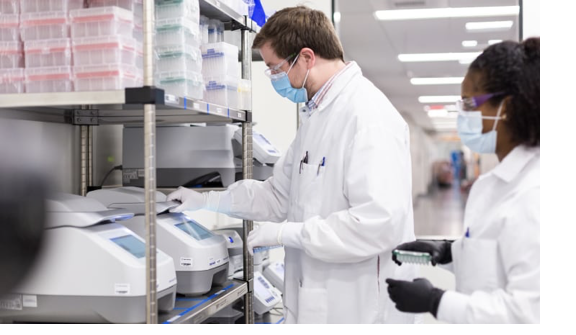
This becomes the “blueprint” behind a cancer vaccine — nine doses of instructions, delivered in mRNA: the molecule our cells use to kick off important processes within our bodies.
Then the immune system goes to work, as it did for Connie Franciosi.
Five years on, Connie’s scans are clear. This year, she turned 80 — a milestone she worried she’d never reach.
Cracking the Body’s Code
What saved patients like her wasn’t a new drug, exactly. It was information — her tumor’s code, read and understood well enough to write a set of instructions her body could act on.
And that points at something much bigger than cancer. Your body runs on code: six billion letters of DNA in every cell, spelled out in an alphabet of four, laid down before you were born.
Everything your body makes, it makes by reading it. A great deal of what goes wrong is that message getting garbled on the way, even if your cells had been reading it correctly for sixty years.
For most of human history we had no way of seeing any of that. Then two things came together at once:
- Sequencing a human genome fell from roughly $100 million in 2001 to a few hundred dollars today.
- We built machines exceptionally good at finding patterns in enormous amounts of data.
Point AI at text, and it predicts the next word well enough to hold a conversation. Point it at financial markets, and it hunts for the patterns that show up before prices move. Point it at hundreds of mutations in one woman’s tumor, and it tells you which 34 her immune system can be taught to hunt. It’s the same kind of puzzle every time. Only the information changes.
And “cancer vaccines” like the one that helped Connie Franciosi are only one small piece of this new approach to medicine.
You already know the most famous example, because more and more Americans are taking them for weight loss as well as Type 2 diabetes. I’m talking about GLP-1 drugs — Ozempic, Wegovy, Mounjaro, and Zepbound.
Just like the mRNA vaccines send a message to your immune system, GLP-1s send a message to let your brain know you’ve had enough to eat.
GLP-1 is a hormone your gut naturally releases into your bloodstream, only it normally just lingers there for a few minutes. These drugs are redesigned to last for days.
At least 10 million Americans are now taking them, but that number’s expected to triple by 2030.
And in trials, doctors keep finding effects other than weight loss, too. By taking the GLP-1s, people had fewer heart attacks and strokes and a lower risk of dementia.
Meanwhile, medical research is also applying this new approach to organ transplants.
More than 100,000 Americans are on the transplant waiting list, and supply often depends on someone healthy dying, in the right way, at the right time, near the right hospital. Twelve people die every day waiting for an organ that never arrives.
Transplant surgeons use pig organs when they can… But our human immune systems often reject them after detecting the wrong proteins on the surface of the organ.
So in southwest Virginia, United Therapeutics (UTX) is raising pigs whose genomes have been rewritten in 10 places — four pig genes switched off, six human genes added. Rewrite that blueprint, and the surface proteins change with it, enough that the immune system lets the organ live.
United Therapeutics is also working to create actual human organs with 3D printing. One lung scaffold design runs to 44 trillion data points, laying out 2,500 miles of capillaries and 200 million air sacs. Its founder, Martine Rothblatt, says the precision of their design is like “driving across the United States and not deviating from a course by more than the width of a human hair.”
Another serious medical problem that requires this level of computational power to solve is called “locked-in syndrome.”
It’s when a person is paralyzed in their brainstem… fully conscious, but completely unable to move or speak. Because their brain is unable to communicate with their limbs or mouth.
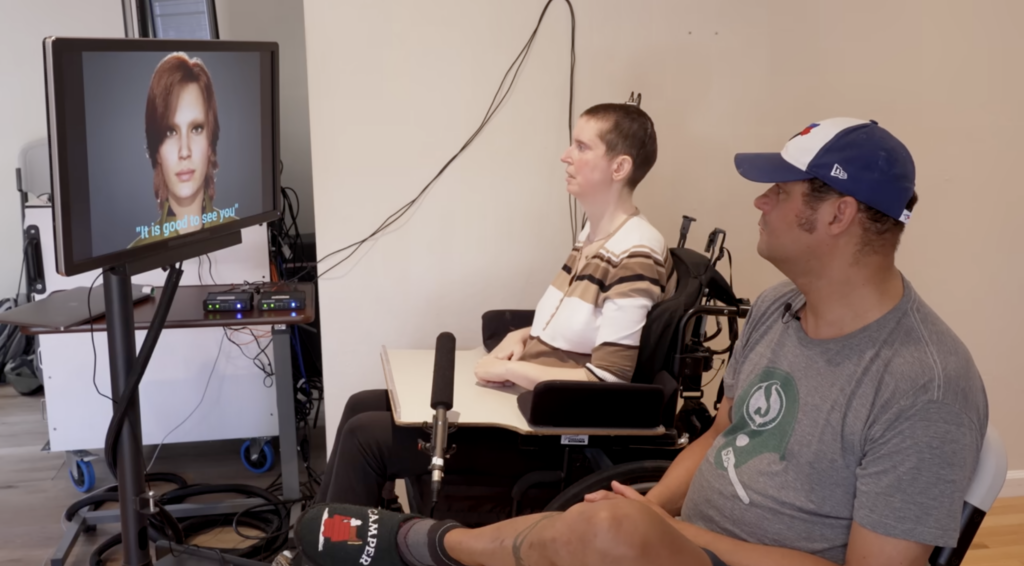
At UCSF, a team led by neurosurgeon Dr. Edward Chang laid a thin grid of electrodes across the surface of a patient’s brain, over the strip of cortex that controls the muscles of speech. The AI isn’t reading their thoughts. It’s intercepting the electrical signals their brain then fires toward a vocal tract that no longer answers… and translating them, in near real time, into words on a screen and a synthetic voice.
One patient, Ann Johnson, hadn’t spoken in 18 years. Now she can hold a conversation. (You can watch it happen here.)
Certain types of blindness could soon be overcome, too.
In a Harvard lab, researchers have taken old mice that had gone blind and made them see again.
They didn’t repair the mice’s eyes. They reset the way the mice’s cells were reading their own DNA. The instructions for a working eye had been there the whole time. The genes had simply gotten shut off as the mice aged. Turn them back on, and their sight came back.
That was 2020. This June, Life Biosciences (co-founded by the geneticist behind that work, David Sinclair) dosed its first human patient — someone losing their sight due to aging in the optic nerve. It’s the first time the FDA has allowed a cellular reprogramming therapy to be tested in a person.
The trial is small — about 18 people — and its main job is to prove the treatment is safe rather than that it works. But the implication is hard to ignore…
If part of getting old is a problem caused by reading mistakes rather than permanent damage, then part of getting old is fixable. The instructions for a younger body may still be sitting in your cells, intact, waiting to be read properly again.
What all of this has in common is that the body is finally becoming legible. We can read the code it runs on. We can copy the messages it sends. And increasingly, we can write new messages and hand them back — which is how a woman goes from a late diagnosis of melanoma to being cancer-free, back on a golf course, at the age of 80.
And the implications for medicine are exciting enough. But for investors, it may be the largest emerging trend any of us will see in our lifetimes.
The Biggest Market in the World
Think about what’s being built here.
Every industry eventually hits limits on how many customers it can service. This one doesn’t have that problem.
Every person alive runs on the same two layers of instruction: the DNA you were born with, and the constant stream of chemical messages your cells trade every second of your life. And every one of us will eventually have something go wrong with them.
Cancer, heart disease, dementia, the slow accumulated failures we call aging — these aren’t niche markets. They are the human condition, and for the first time in history they’re becoming engineering problems.
And on Wall Street, it’s sending stocks higher.
Look at what the GLP-1 drugs alone have done. In November 2025, Eli Lilly (LLY) became the first healthcare company to hit a $1 trillion valuation — more than double the value of the next-largest drug company. It’s added $750 billion in market value since the end of 2022, on the back of three GLP-1 drugs.
One of them, Mounjaro, is now the world’s best-selling medicine. It overtook Keytruda, the blockbuster cancer drug made by Merck (MRK), in early 2026, ending a three-year reign.
Put Mounjaro together with Zepbound, Eli Lilly’s other version specifically for weight loss (instead of diabetes)… And they did $36.5 billion in sales last year.
Lilly’s third GLP-1, Foundayo – which comes in pill form versus injectables – has also been a big mover for the stock.
Then there’s what happened on Aug. 19, 2026. Moderna and Merck (MRK) announced that the mRNA melanoma vaccine had succeeded in a full Phase 3 trial of 1,137 patients — the first time in history a cancer vaccine has worked at that stage.
Moderna added $45 billion in market value that day. Merck rose 12.6%. The Nasdaq Biotechnology Index closed at a record high.
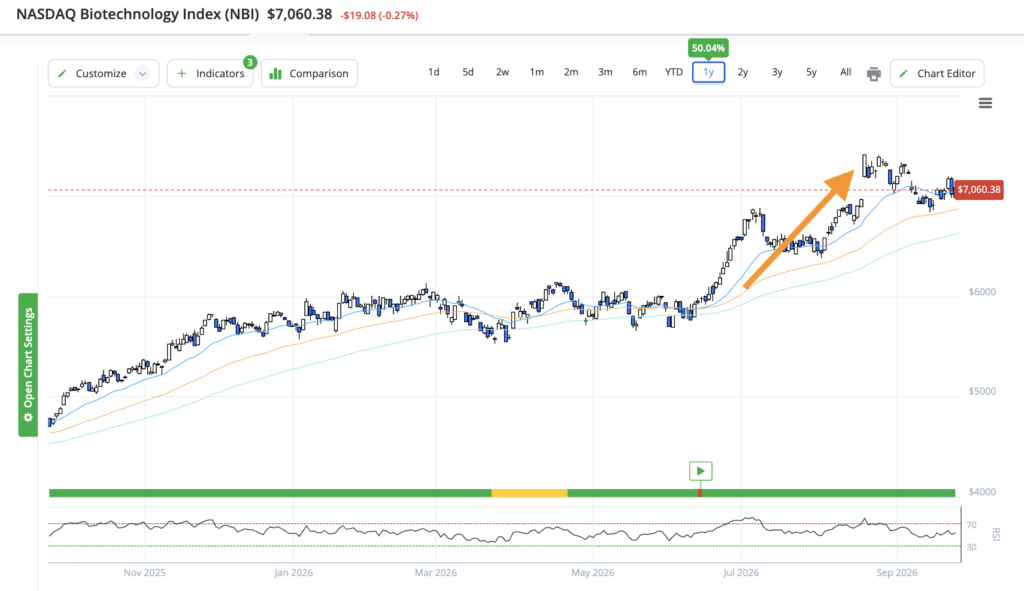
That was a single trial result, for a single disease, at a single company. Multiply that across every disease that can be cured with the right information, and you start to see the size of what’s coming.
In this report, created exclusively for you and your fellow 2026 Stansberry Conference & Alliance Meeting attendees, I’ll walk you through the 12 stocks best positioned for this new leap in medical science.
We’ll look at the companies reading the body, the ones copying its messages, the ones rewriting them, and the ones selling the tools to everybody else.
Twelve companies, four parts of the same, revolutionary read-write system.
Let’s dive in…
Twelve Companies, Four Parts of the System
The companies in this report are grouped by the job they do. Some read the body’s code. Some copy the messages it sends. Some write new ones. And some supply the tools everyone else depends on.
I. The Readers find out what’s going on. These are the testing and sequencing firms that turn your biology into something a doctor can act on. You can’t treat what you can’t see. And for most of medicine’s history the seeing came late, when a problem had already announced itself as a symptom. Reading the body earlier — before symptoms, before damage — is the single highest-leverage change happening in medicine right now. It’s also where AI does its most obvious work, because finding a faint ripple in an ocean of data is exactly what it’s built for.
II. The Messengers work with the conversation your cells are already having with each other. Some of those messages turn out to be extraordinarily powerful when you can send them on demand and make them last. The GLP-1 story is proof of concept. If one copied message can reshape appetite, metabolism, heart risk, and possibly your risk of dementia, too the obvious question is what the others can do. This is where some of the largest and most profitable companies in the report live, because it’s the layer already working at full commercial scale — tens of millions of patients, tens of billions in sales.
III. The Editors don’t just copy your body’s instructions — they change them. Some write a new message, like the Moderna cancer vaccine did for Connie Franciosi’s melanoma. Some of the Editors in this report silence a faulty one before the body can act on it. Some edit the DNA directly, correcting the error at its source. And one is manufacturing replacement parts for bodies whose own code can no longer maintain them. This is the frontier, where treatment starts to become cure. It’s also the highest-risk group here, and the one with the highest ceiling.
IV. The Toolmakers supply everyone else. They don’t care which therapy wins. They sell the sequencers, the reagents, and the instruments that every lab in this field runs on, and they get paid whether a given drug succeeds or fails. It’s the oldest smart play in any boom — during a gold rush, sell shovels.
Let’s start with the Readers.
I. The Readers
Guardant Health (GH)
Guardant’s technology checks for cancer using just a vial of blood in what’s called a “liquid biopsy.”
A tumor, as it grows, sheds tiny fragments of its DNA into your bloodstream. Those fragments are vanishingly rare — a tiny fraction among billions of normal molecules circulating around… But they carry the tumor’s signature. Find them, and you can tell a cancer is there in a much less invasive way.
And for patients already diagnosed, this is a better way to track the disease, too. Guardant’s tests tell an oncologist which mutations are driving a particular tumor, and therefore which drugs are worth trying.
Another product, Reveal, watches for cancer’s return after treatment — and picks it up months before it would show on other scans.
But the reason Guardant sits at the front of this report is a test called Shield.
Shield screens for colorectal cancer from an ordinary blood draw.
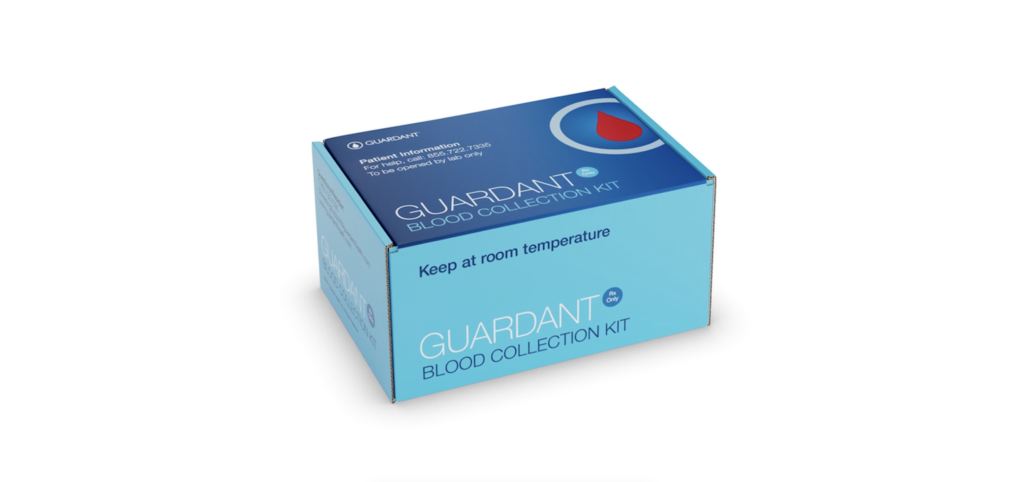
Colorectal cancer is the second-leading cause of cancer death in America, but it’s also considered one of the most preventable, because caught early it’s highly treatable.
The problem is, roughly a third of eligible adults have skipped screening altogether, because your choices are pretty much between a colonoscopy or a stool sample mailed to a lab.
A blood test changes that arithmetic entirely. And the market has noticed. Shield revenue tripled (from $14.8 million to $52.9 million) year over year in the second quarter of 2026. The American Cancer Society added Shield to its screening guidelines. UnitedHealth Group (UNH) became the first major commercial insurer to cover it and so have employer benefits managers EviCore and Carelon – extending access to some 94 million people altogether.
Company-wide revenue grew 44% in the second quarter to $335 million.
The AI angle: Guardant runs its testing on a data engine it calls InfinityAI. The core problem is signal detection — separating a few cancer-derived DNA fragments from the vast background of ordinary genetic material in a tube of blood, and doing it reliably enough that a doctor will act on the answer. That’s a pattern-recognition task at a scale no human could attempt, and it improves with volume. Every test Guardant runs makes the next one slightly better.
The risk: This is a growth story, not a profit story, and it will trade like one. Guardant stock has a high Volatility Quotient (VQ%) of 45.6%. And the company is still burning cash — roughly $200 million expected this year — and its future depends heavily on insurers agreeing to pay for Shield at scale. Coverage has been expanding, but reimbursement decisions are slow, political, and outside the company’s control. It also faces well-funded competition in blood-based screening from Abbott Labs (ABT) and smaller innovators like Freenome (FRNM) and Grail (GRAL).
Tempus AI (TEM)
While competitors like Guardant aim to do “standalone” models extremely well, Tempus’ approach is “multimodal.” In other words, it’s using genetic sequences and pathology images, treatment histories, plus what actually happened to patients afterward.
A tumor’s genetic profile tells you a lot. But matched against hundreds of thousands of previous patients with similar profiles, and the treatments that worked or failed for them, doctors can get an even clearer picture of what to do next.
For a cancer patient, that can be the difference between a treatment that works and six months lost to one that was never going to.
And to that end, the company says it’s assembled one of the largest collections of clinical and molecular data in the medical world.
Every test Tempus AI runs adds to the library. Every addition sharpens the next answer. It’s an advantage that compounds, and one a competitor can’t shortcut, because they don’t have Tempus’ extensive library of patient outcomes dating back 10 years.

The AI angle: It’s in the name, and it’s in the business model. Tempus is an AI native building foundation models on its own data, the same basic architecture behind the chatbots you’ve used, trained on cancer instead of text. It delivered the first version of one such model to AstraZeneca (AZN) this year, and between that collaboration and another with oncology lab Pathos, Tempus is expecting $200 million in data licensing fees over three years.
A study in Nature Medicine reported “diagnostic-grade precision” from PRISM2, one of Tempus AI’s multimodal models developed with Microsoft. In September the company won up to $9.5 million in federal funding to develop an autonomous AI agent for cardiology — software intended to coordinate care without a clinician having to direct each step.
Note the second revenue stream. Tempus serves hospitals and it licenses data and models to drug companies, too. Pharma will pay a great deal to make the clinical development process less painful, and Tempus AI has one of the few solutions.
The numbers: Revenue hit $1.3 billion in 2025, up 83.4%. Total contract value exceeded $1.1 billion last year, and existing customers spent 26% more than the year before. Now for 2026, the company expects roughly $1.6 billion revenues, another 25% growth. It turned its first quarterly net profit in the second quarter of 2026 — $5.6 million, against a $42.8 million net loss a year earlier.
The risk: Tempus is the most volatile stock in this report, with a Sky-High Volatility Quotient of 73.9%; its share price moves hard on sentiment. Profitability has only just arrived and remains thin. The company has grown partly through acquisition — Ambry Genetics last year, Personalis (PSNL) pending — which makes the underlying organic growth rate harder to read, and integration is never free. The business also depends on insurers and hospital budgets, both of which can tighten.
Owning TEM stock would be a direct bet that medicine is heading toward treatment guided by each patient’s own data. If that’s right, few companies are better placed. Consider sizing a position accordingly.
Medtronic (MDT)
The first two Readers work on samples — blood drawn, tumors sequenced, analysis done in a lab. Medtronic reads the body from inside it, continuously, while the patient goes about their life.
The company is the largest medical device maker in the world. Pacemakers (and other heart monitors), insulin pumps, spinal implants, heart valve replacement, and a whole portfolio of surgical systems – all adding up to $36.4 billion in revenue last year.
What makes it a Reader is the evolution of its devices.
Take the LINQ, a cardiac monitor about the size of a paperclip that’s inserted under the skin of the chest and watches every heartbeat for up to four and a half years. Then, using a smartphone app or a bedside transmitter, it reports all that info to a cardiologist.
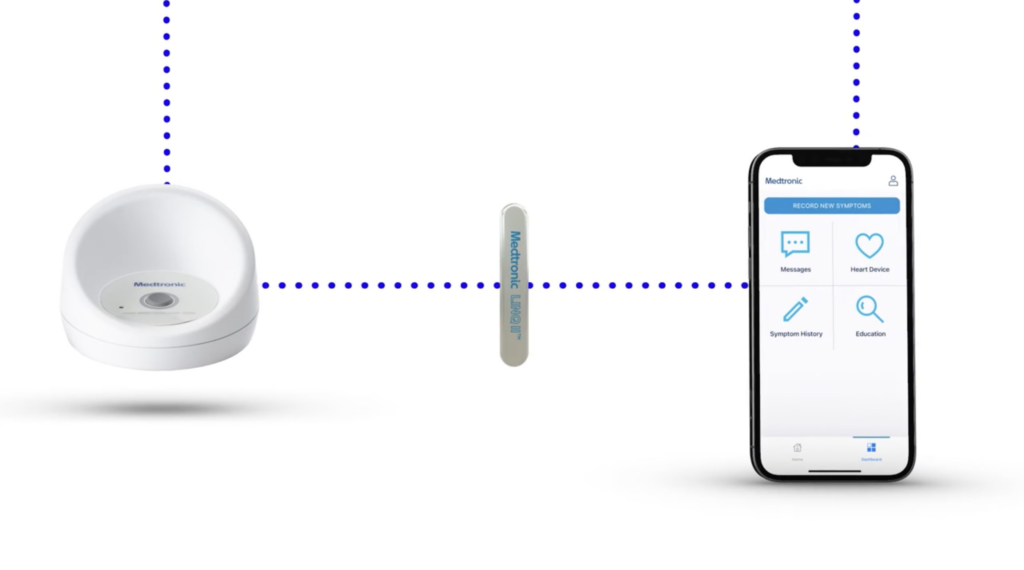
The challenge with a device that vigilant is to prevent false alarms — a monitor that cries wolf a hundred times a month would bury the one episode that mattered, and the clinic could miss it.
So, behind the LINQ systems are AccuRhythm AI, a deep-learning model trained on more than a million recorded heartbeats. The AI sits in the cloud and filters the incoming data. It strips out the false alerts and passes on the real ones. Then, while the patient lives their life, the device gets better and better at its job.
That pattern repeats across the portfolio:
- GI Genius was the first machine-learning device the FDA cleared for colonoscopy, flagging polyps on screen that a doctor’s eye might pass over.
- Medtronic’s glucose monitoring system use algorithms to adjust blood-sugar levels every five minutes – with none of the fingersticks that patients hate.
- Its Stealth AXiS system uses AI to help surgeons plan complex spinal procedures.
- Its Hugo surgical robot now runs real-time video analysis during operations, built on Nvidia (NVDA) infrastructure.
The AI angle: What Medtronic has is something most AI companies would trade a great deal for — millions of devices already implanted in human bodies, generating continuous physiological data, with the regulatory approvals and hospital relationships to act on it. The algorithms are the layer that makes that data useful. The installed base is the moat.
The numbers: Fiscal 2027 first-quarter revenue of $9.8 billion, up 13.7% year over year, with earnings per share up 40.7%. Cardiovascular led revenues at $3.9 billion, up 18.9%. This past December, Hugo won FDA clearance for urological procedures, with filings pending for general and gynecological surgery — a direct challenge to Intuitive Surgical’s long dominance in soft-tissue robotics.
MDT stock offers a 3.2% dividend, and the company’s raised its payout every year for 49 years. Plus, the stock price isn’t too jumpy, with a Volatility Quotient of 16.3%, which constitutes Medium Risk. From that standpoint, MDT is the most “boring” stock in the report — perfect to complement more volatile holdings.
The risk: Size cuts both ways. Medtronic will not triple on one trial result, and its growth rate reflects a company this large. It carries meaningful litigation exposure, including $1 billion in antitrust liability and thousands of hernia mesh claims. Hospital procurement is consolidating, which squeezes pricing. And in robotics it’s the challenger, not the incumbent.
II. The Messengers
Eli Lilly (LLY)
Lilly is the company whose drug tirzepatide — Mounjaro for Type 2 diabetes, Zepbound for weight loss — was the best-selling medicine in the world last year with $36.5 billion in sales. All in all, the company brought in $65.2 billion in total revenue in 2025, up nearly 45%. Guidance for 2026 is $85 to $87 billion.
What matters most for an investor arriving now is what’s behind that.
In April 2026, the FDA approved Foundayo, Lilly’s oral GLP-1 — the first small-molecule pill in the class. Every injectable GLP-1 loses a large group of potential patients by requiring needles. A pill removes that barrier entirely, and it’s cheaper to manufacture and ship. In a head-to-head trial published in The Lancet, it beat oral semaglutide on both blood sugar control and weight loss.
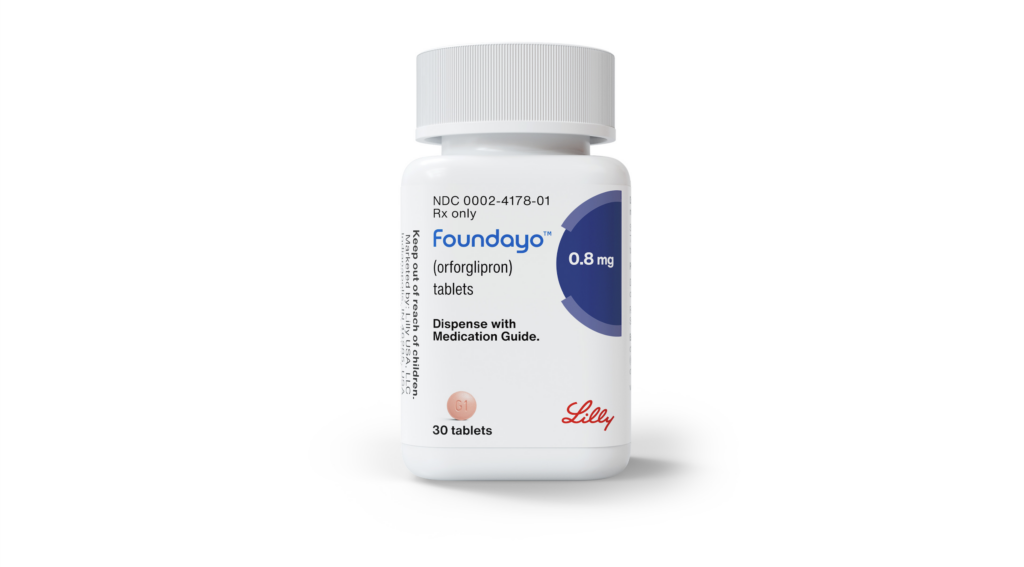
Next in the pipeline is retatrutide, which copies three hormones rather than one. It’s being tested to treat knee pain from osteoarthritis and sleep apnea as well as obesity and managing blood sugar. Phase 3 patients lost an average of 71 pounds, and Lilly plans to file for approval in early 2027.
And there’s the part of the business that has nothing to do with weight. For one, Lilly sells Kisunla, an approved Alzheimer’s treatment. It has 42 Phase 3 programs running, and over 75% of its new medicines are outside the GLP-1 family entirely — chronic pain, cardiovascular disease, early breast cancer. This is not a one-drug company.
The AI angle: Lilly’s GLP-1s weren’t discovered by AI. But the company sees its massive potential. It’s opened a co-innovation AI lab with Nvidia to accelerate drug discovery, and in March 2026 signed a $2.75 billion deal with Insilico Medicine, which has an AI platform that has already produced 28 drug candidates. Lilly is spending heavily to make sure its next franchise is found faster than its last one was.
The numbers: A $1 trillion stock, the first healthcare company ever to reach that milestone in November 2025. Revenue up 44.7% in 2025. Stock price that’s tripled since Mounjaro’s initial approval in 2022.
The risk: The obvious one is price. Lilly trades at a valuation that already assumes a great deal goes right, and a stock priced that way punishes any stumble. Political pressure on drug pricing is real and growing — the company has already agreed to cap Medicare out-of-pocket costs at $50 a month. Competition in obesity drugs will be crowded within two or three years, with Novo Nordisk (NVO), AstraZeneca, Pfizer (PFE), and Amgen (AMGN) all pushing. And with 40-plus Phase 3 programs running, a high-profile failure is a matter of when, not if.
If you’re considering buying Lilly, note that the stock offers Medium Risk, with a Volatility Quotient of 26.1%. So, expect a slower climb than the smaller names in this report and expect real drawdowns along the way.
Novo Nordisk (NVO)
Nordisk is the company that popularized the GLP-1 drug category by bringing us semaglutide — Ozempic for diabetes, Wegovy for weight loss.
For a century Nordisk has done essentially one thing and done it better than anyone: study the hormones that govern blood sugar and appetite. At its peak in 2024, its market cap was more than $600 billion, making Nordisk the most valuable company in Europe.

The stock is down 70% from those highs, and the company has guided to sales and profits somewhere between flat and down 6% this year.
So why is it in this report at all?
Because Novo still holds a genuinely valuable position, and it is now priced as though it doesn’t. It got the first weight-loss pill to the US market ahead of Lilly, and the oral Wegovy has already reached a record 7 million American prescriptions. 90% of that demand is people paying cash directly — a consumer business, not an insurance one, which is a different and in some ways better thing to own.
Management laid out its plan in London this September: more than five new blockbusters by 2030, over 60 million patients globally, manufacturing scaled tenfold to supply 15 million people with oral obesity drugs by the end of the decade. Next-generation injectables roll out starting early next year.
Nobody alive holds deeper institutional knowledge of peptide medicine — the exact chemistry this entire shift runs on. Where Lilly is the leader you pay up for, Novo is the pioneer the market has been neglecting.
The risk: This is the highest-uncertainty large-cap in the report. The patent cliff is real and arrives in 2032, when semaglutide’s expires. The pipeline has disappointed repeatedly — its newer weight-loss drug, CagriSema, failed to compete with tirzepatide in trials, and the company halted trials of its experimental heart drug ziltivekimab.
NVO shares have a Volatility Quotient of 31.4% (High Risk) and fell another 11% this September when analysts pressed management on pricing and dealmaking at Nordisk’s capital markets day. Analysts expect Lilly’s Zepbound to outsell Wegovy by more than $7 billion this year.
Nordisk would be an investment in the cheaper, more contrarian side of the GLP-1 trade — a dominant franchise with a credible but unproven plan to climb out of its hole. If you’d rather not make that call, Lilly is the more straightforward version to consider.
III. The Editors
Moderna (MRNA)
Most people know Moderna from COVID, and for a while that was the whole story — an obscure biotech that happened to have the right platform at the right moment, followed by a long and painful comedown as demand evaporated. The stock is down more than 60% from its pandemic peak.
The cancer work is why it’s in this report – the one that helped Connie Franciosi:
Moderna’s personalized cancer vaccine, developed with Merck and now named intismeran autogene, is the purest expression of the read-write revolution.
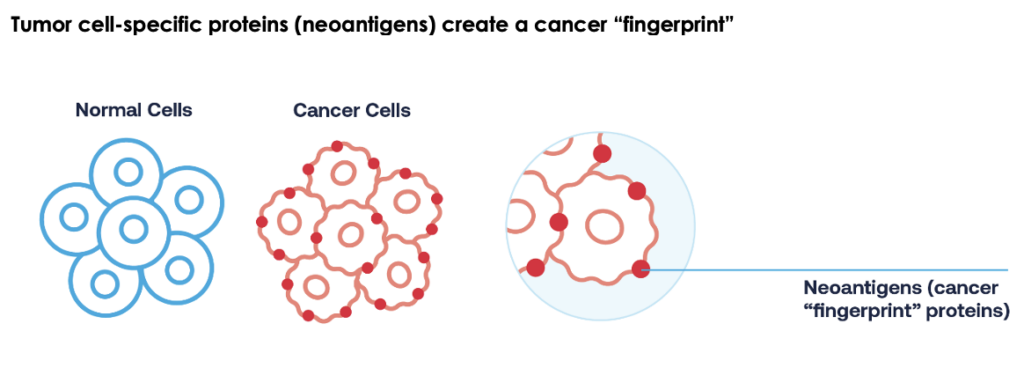
Sequence a patient’s tumor. Let software identify which of its mutations the immune system can be taught to see. Write those into mRNA — the molecule the body already uses to carry instructions — and let the patient’s own immune system do the work.
On Aug. 19, 2026, that approach passed a Phase 3 trial of 1,137 melanoma patients. It was the first time in history an mRNA cancer treatment has succeeded at that stage. Moderna added $45 billion in market value in a day.
What matters now is that this was never meant to stop with one drug. It’s a platform. Moderna and Merck are running nine Phase 2 and Phase 3 trials across melanoma, lung cancer, bladder cancer, and kidney cancer. If the approach works broadly — and that’s the open question — the same process could apply to almost any solid tumor.
The AI angle: Central and unambiguous. Nobody picks 34 targets out of hundreds of mutations by hand, for each individual patient, fast enough to treat them, but the AI behind this vaccine does. The prediction step is the product.
The numbers, and they’re the uncomfortable part: Second-quarter revenue was $0.1 billion, with a GAAP net loss of $0.8 billion. The company expects up to 10% revenue growth in 2026 and projects year-end cash of $4.7 to $5.2 billion. Management cut roughly $2.2 billion from operating expenses year-over-year.
The risk: Moderna is burning cash. The cancer franchise is years from meaningful revenue, and the vaccine business is under pressure in a difficult U.S. political environment. Plus, its norovirus vaccine missed its Phase 3 interim target this year.
Overall, this is the highest-conviction, highest-risk name in the report. Its Volatility Quotient is Sky-High, at 54.3%. If personalized cancer vaccines work across multiple tumor types, Moderna is positioned at the center of it. If the melanoma result turns out to be the high-water mark, you’re holding a loss-making vaccine company. Consider sizing a MRNA investment as the speculation it is.
Alnylam Pharmaceuticals (ALNY)
Whereas you might say Moderna’s mRNA vaccines write the body a new message, Alnylam does the opposite. It intercepts a message the patient’s mRNA is sending and stops it from arriving.
The technique is called RNA interference, and the story behind it is one of the better ones in modern science.
Two researchers discovered in the 1990s that cells have a natural mechanism for silencing their own genes — a kind of executive veto on messages in transit. They won a Nobel Prize for it in 2006. Alnylam spent the next two decades turning that discovery into actual medicines, through years when most of the industry had written the approach off.
And why silence a gene? If it’s faulty, it sends instructions to build a faulty protein that traditional drugs then have to chase around the body, trying to block it. By stopping the instruction from ever being carried out, RNA interference prevents the problem from happening in the first place.
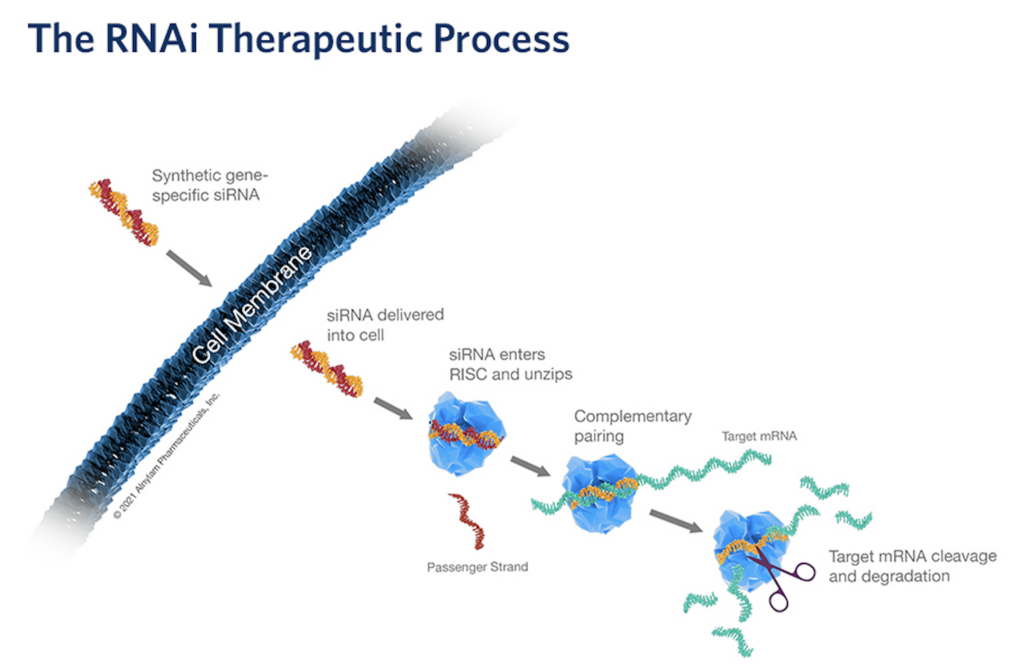
The company’s lead drug, Amvuttra, treats a disease called ATTR amyloidosis, where a misfolded protein slowly accumulates in the heart until it fails. Silence the gene that orders it, and the body stops producing the protein that’s killing the patient.
The numbers are the part that separates Alnylam from most of this group. Second-quarter 2026 revenue reached $1.2 billion, up 74% year over year. Revenue specifically for its leading franchise of liver drugs grew 89%. Earnings per share came in at $1.23, versus a loss in the year-ago quarter.
This is a commercial-stage company with a real, fast-growing product — rare among the Editors.
The AI angle: Alnylam announced this year that it is accelerating AI across the business with:
- A research collaboration with Inceptive Nucleics aimed at delivering RNA interference innovations even faster,
- A partnership with a large California health system to identify ATTR patients earlier in routine care,
- And an expanded arrangement with Komodo Health for commercial intelligence.
Designing an RNA interference treatment means selecting a sequence that silences precisely the intended gene and nothing else — a prediction problem of exactly the kind these models handle well.
The pipeline: Four Phase 3 trials running, plus three other trials due for readouts in the second half of 2026. A next-generation TTR silencer called nucresiran is enrolling ahead of schedule — enrollment was expanded from 1,250 to around 1,750 patients in the first quarter. And the company has started a Phase 1 study of its first fat-tissue-targeted program, which puts it in the largest market in medicine: obesity.
The risk: Alnylam trimmed its full-year TTR sales guidance in the second quarter, after demand normalized in the ATTR-CM market following an initial surge — a reminder that launch curves rarely stay vertical. The company is heavily concentrated in one franchise, and it faces competition in ATTR from larger firms. The obesity program is at the earliest possible stage and shouldn’t be priced in. The stock itself, though, has a reasonable Volatility Quotient of 30%, which is considered Medium Risk.
CRISPR Therapeutics (CRSP)
CRISPR is another technology that goes to the source and edits the messages in your genes before they can cause problems.
If you imagine DNA like a document six billion characters long, CRISPR is the find-and-replace tool. Point it at a specific sequence, and it cuts the DNA at exactly that spot so the letters there can be removed, corrected, or swapped.
It’s the closest thing biology has to an editor’s cursor, and its discovery won a Nobel Prize in 2020.
The company co-founded by one of those Nobel winners, Emmanuelle Charpentier, is CRISPR Therapeutics. And it offers a single treatment for debilitating diseases, rather than a lifetime of managing the symptoms.
Casgevy, developed with Vertex, is its approved CRISPR-based medicine for sickle cell disease and beta thalassemia — serious blood disorders caused by typos in the patient’s genes.
Doctors take the patient’s own stem cells out, edit them, and put them back. For sickle cell patients, it can eliminate the episodes of agonizing pain that send people to hospital for days. Casgevy is now approved in 39 countries.
CRSP’s second-quarter 2026 revenue (of $76 million) was up 151% year over year and 78% from the previous quarter. In July the FDA approved it for children as young as two — cleared in just 53 days from filing — which makes roughly 5,500 additional patients eligible.
Where it gets even more interesting: Editing cells outside the body works, but it’s a complicated, expensive procedure. The real prize is editing cells inside the body, with an infusion.
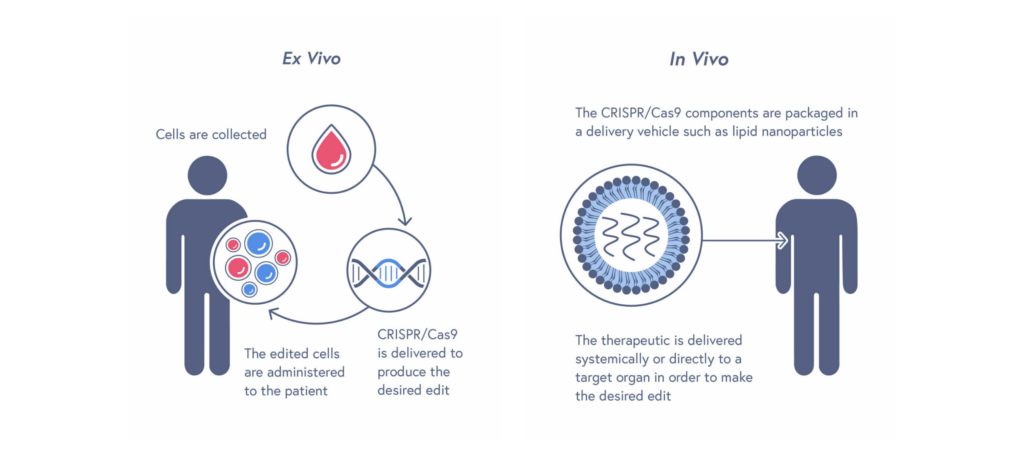
CRISPR Therapeutics is building a delivery platform to do exactly that in the liver. And the early data is encouraging, showing 50% – 80% reductions in triglycerides and LDL cholesterol, as published in the New England Journal of Medicine.
And mind you, this is after a single intravenous infusion. Not a statin taken daily for 30 years. One dose that edits the gene responsible.
The company has three cardiovascular programs in the clinic, plus trials started this year for a genetic deficiency that causes serious lung and liver damage.
The AI angle: The central technical problem in gene editing is guide design — telling the tool precisely where to cut. Aim slightly wrong and you edit the wrong gene, with consequences nobody wants. Machine learning has become the standard approach to predicting which guides will work and which will stray, and it’s the reason bespoke gene therapies are being designed every day for more and more conditions.
The risk: This is a genuine speculation. Casgevy revenue is real but small, and Vertex holds the exclusive license and does the manufacturing — CRISPR Therapeutics takes a share. The pipeline that matters is almost entirely Phase 1. Gene editing carries safety questions that will take years of follow-up to answer fully. The company holds roughly $2.4 billion in cash, which buys time, but it is spending heavily and not reaching a profit.
The stock trades with High Risk, holding a Volatility Quotient of 45.7%. Consider owning it small, and for the platform rather than the current product.
Vertex Pharmaceuticals (VRTX)
Cystic fibrosis is another tragic example of typos in the genetic code causing a lifetime of disease. Vertex is the company that’s solving it.
The disease is caused by a fault in one gene producing a malformed protein, which means salt and water can’t move properly through cells. The result is thick mucus that clogs the lungs and digestive system. Until the twentieth century, children with cystic fibrosis were not expected to reach the age of five, much less adulthood.
Vertex’s solution – rather than simply edit the gene — is to design small molecules that grab the misshapen protein and coax it into working anyway.
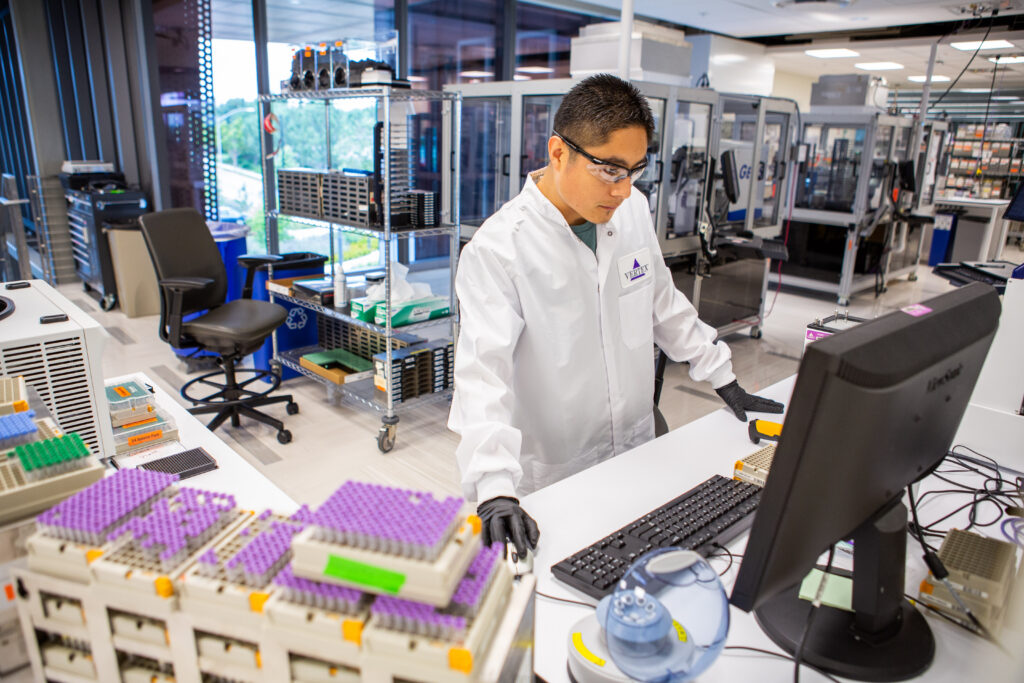
The company now has a series of these drugs: Trikafta/Kaftrio, its bread-and-butter, and most recently Alyftrek, which delivered roughly $1 billion in revenue in the first half of 2026. Together they can treat about 95% of people with the disease, including newborns.
What was once a childhood death sentence can now become a manageable condition treated with a pill.
That franchise is the foundation of everything else at Vertex. The company expects $12.9 to $13.1 billion in total revenue this year, which makes it by some distance the most financially solid of the Editors.
What it’s building on top of that: Vertex is the maker and exclusive license holder for Casgevy — the CRISPR sickle cell therapy from the previous recommendation.
Then Journavx is a new painkiller that blocks pain signals without touching the brain’s opioid receptors — and thus showed no addictive risk (in Phase 3 trials), in a country with an opioid crisis. Over 535,000 prescriptions in the second quarter, with coverage now reaching 260 million Americans.
And the pipeline reaches further: Zimislecel for Type 1 diabetes; Povetacicept for kidney disease; rare endocrine diseases, for which the company just acquired Crinetics to add a fifth business line.
The AI angle: The lightest of the Editors, and worth being straight about. Vertex’s cystic fibrosis drugs came from a high-tech process, but still just regular (human) medicinal chemistry, not machine learning.
Where it sits in this report is as the commercial and manufacturing partner for gene editing — the company that turns an editing technique into an approved, reimbursed product delivered through a global treatment network. That capability is even rarer than the science.
The risk: Concentration. Cystic fibrosis treatments produce 96% of its revenue, and that patient population is finite — Vertex can already treat most of it, so growth has to come from new franchises. Journavx uptake is running into payer restrictions from insurance companies. Competition in kidney disease is fierce. And Vertex is spending fast, with operational expenses up 16% year over year.
VRTX is one of the steadiest stocks in this report, though, with a Volatility Quotient of 20.9% (Medium Risk).
United Therapeutics (UTHR)
You met United Therapeutics early in this report: The company raising pigs in Virginia whose genomes have been rewritten to produce heart valves a human body can accept… Plus, printing lung scaffolds detailed enough to need supercomputers to design.
The company’s also profitable, which sets it apart in this group.
Its main drug, Tyvaso, treats pulmonary arterial hypertension (PAH) — a disease in which the arteries feeding the lungs narrow and stiffen until the right side of the heart gives out.
Martine Rothblatt founded the company in 1996 after her daughter was diagnosed with it. Now, Tyvaso is the most prescribed treatment of its type in America. Plus, the company has also filed for a new PAH drug, ralinepag, where trials showed a 55% reduction in disease progression.
But that’s even before we get into the organ innovations, which is why it’s in this report.
United Therapeutics is the only company in the world running multiple authorized human trials in animal organ transplants:
- Its UKidney study is treating its first six-patient group.
- A thymus-kidney is being developed, too.
- The FDA has cleared its UHeart transplant trial.
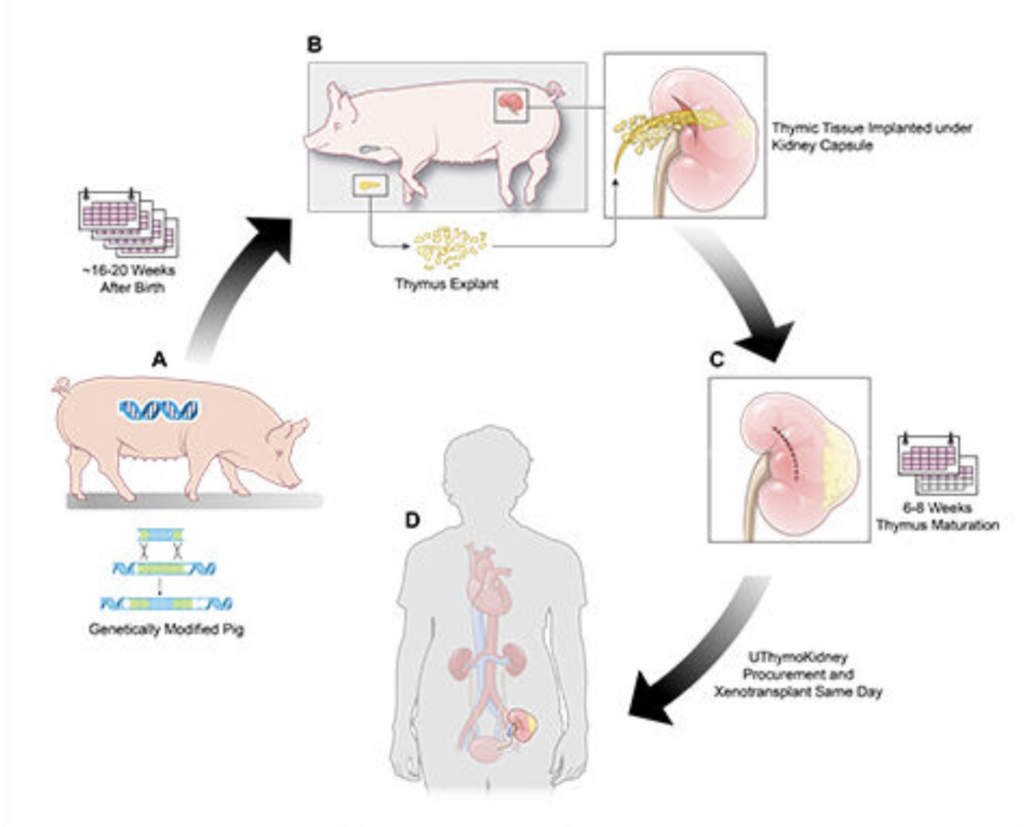
And two more commercial-scale production facilities, in Minnesota and Texas, are due to finish construction by year end.
The AI angle: One of the company’s lung scaffold design involves 44 trillion individual points, 2,500 miles of capillaries, and 200 million air sacs. That isn’t drawn by hand. So, AI and bioinformatics are central to solving the organ shortage. And, in fact, United Therapeutics is collaborating with another of our names in this report – Tempus AI – to do just that.
The risk: The current business is under real pressure. Overall, United Therapeutics turned in second-quarter revenue of $783 million, with net income of $333 million. But that revenue number was down 2% year over year and came in below management’s own expectations, as competitors moved into the inhaled market. Management declined to update full-year guidance.
The organ work, meanwhile, is a decade-long project that could fail entirely. Early xenotransplant patients have had the organs last months, not years. Nobody knows yet how long these organs can be made to last with future innovations.
What you’re buying is a profitable specialty pharma business with two near-term approvals pending, and a genuinely audacious long-term option attached. The stock is much less volatile than most in its cohort, with a Volatility Quotient of 21.4% (Medium Risk). Plus, the share count has been shrinking — $1.5 billion in buybacks in the first half of 2026 — which means you could be paid to wait.
IV. The Toolmakers
Illumina (ILMN)
Before you can find a tumor’s mutations, silence a faulty gene, or edit a typo out of someone’s DNA, you have to read the code. Illumina builds the machines that do the reading.
Remember that cost curve from earlier — $100 million to sequence a genome in 2001, a few hundred dollars today?
Illumina is most of the reason that happened. Its DNA sequencer, NovaSeq X, is the standard equipment of modern genomics, the machine the science in this report runs on.
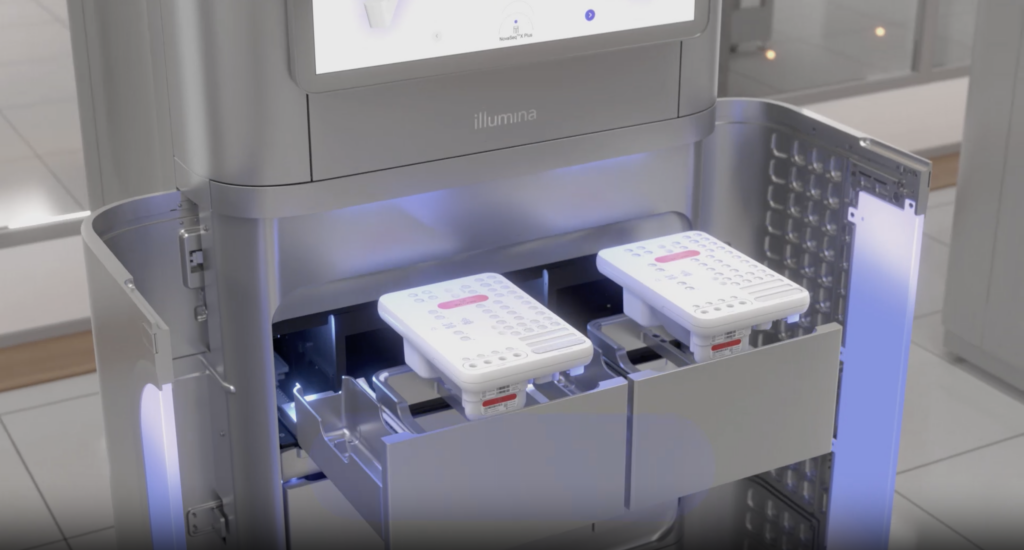
The business model is the attractive part. Illumina sells an expensive instrument, and then sells the chemical kits required to run it, over and over, for as long as the machine is in service.
Every NovaSeq X placed in a lab generates consumable revenue for years. As of mid-2026, 78% of clinical sequencing volume had moved onto that platform, heading for 80–85% by year end.
Illumina spent several miserable years on a disastrous acquisition — it bought the cancer-screening company Grail before regulators had finished reviewing the deal, ultimately had to unwind it, and spun Grail back out in 2024. Activist investors arrived. Revenue stalled. China placed the company on its “unreliable entities list.”
That chapter now appears to be closing. Second-quarter 2026 revenue rose 9.5% year-over-year (to $1.2 billion), with management lifting full-year guidance to $4.60–$4.64 billion. The stock is up roughly 160% from its October 2025 low, hit a 52-week high, and rejoined the S&P 500 this month.
The AI angle: Sequencing produces staggering amounts of raw data, and the interpretation layer is where the value increasingly sits. Illumina has been building there:
- It acquired SomaLogic to move into proteins as well as genes,
- It’s building a data platform for pharmaceutical partners,
- And it’s developing workflows for detecting the trace amounts of cancer left after treatment.
The risk: Academic and research customers remain under funding pressure, and that part of the market is weak. The China situation is unresolved. Tariffs are a live issue. The stock itself is considered High Risk, with a Volatility Quotient of 35.6%.
And Illumina now faces credible competition for the first time in a decade from Roche (ROP), which just launched its DNA sequencer “Axelios” this summer. It’s the incumbent defending a position rather than the upstart taking one — though its installed base and the switching costs around it remain a genuine moat.
Thermo Fisher Scientific (TMO)
While Illumina sells the machine that reads DNA, Thermo Fisher sells nearly all the other equipment.
The scale is hard to convey until you see the number: roughly $48 billion in revenue this year, which makes Thermo Fisher larger than most of the companies in this report combined. It supplies instruments, reagents, plastics, chemicals, testing services, and manufacturing capacity to essentially every drug lab, hospital laboratory, university department, and biotech startup on the planet.
Whichever therapies in this report succeed — a personalized cancer vaccine, a gene-silencing drug, an edited stem cell, a printed organ…
The odds are strong it was developed using Thermo Fisher equipment and is manufactured with Thermo Fisher materials.
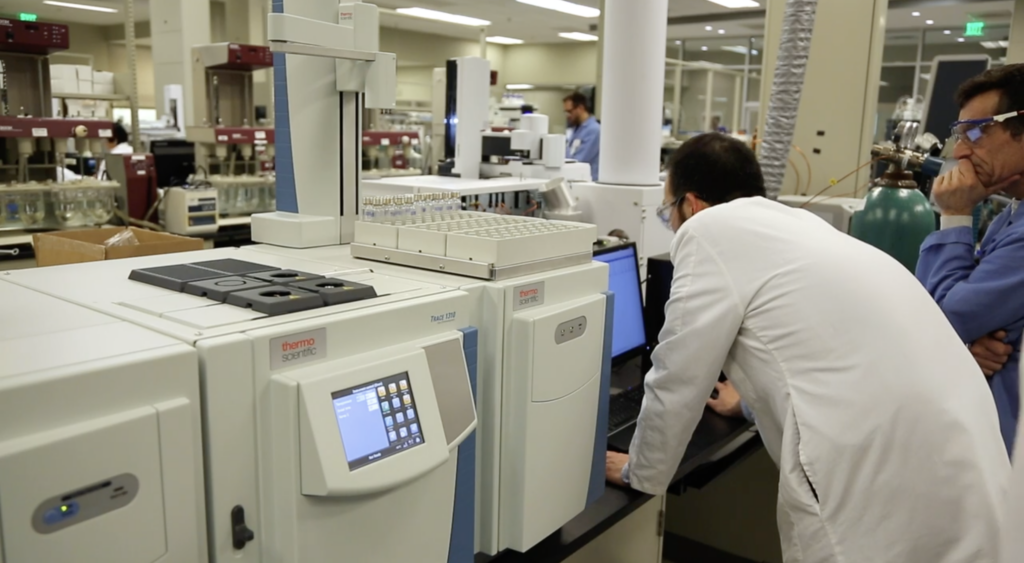
That’s the argument for owning this one. You aren’t picking which treatment wins. You’re betting that the total volume of biological research and manufacturing keeps rising, and this company collects a toll on all of it.
Thermo Fisher also manufactures medicines too, though, under contract for pharmaceutical companies. And it has been buying capacity aggressively — Solventum’s filtration business, a sterile manufacturing site from Sanofi, a flagship bioprocess design center in Massachusetts, and Clario, which handles clinical trial data.
The numbers: Second-quarter 2026 revenue rose 10% to $12 billion. Earnings per share grew 9%, with margins expanding 17.4%, plus returned $1 billion to shareholders in buybacks and $334 million in dividends. On the conference call, management raised full-year guidance to $47.4–$48.1 billion.
The AI angle: Indirect but real. Thermo Fisher launched AI-driven capabilities from Nvidia alongside its next-generation instruments this year, and it acquired Clario to digitize clinical trial data. More fundamentally, AI-driven biology consumes enormous quantities of physical experiments — every model that predicts something still needs a lab to confirm it. More prediction means more testing, not less.
The risk: This is one of the slowest-moving names in the report, and it should be. With a Volatility Quotient of 20.2% (Medium Risk), Thermo Fisher won’t double on a trial result. Its growth tracks the research and development budgets of the pharmaceutical industry and of governments, both of which move in cycles — academic and government markets are showing only low single-digit growth right now. Organic growth is running around 4%, with the rest coming from acquisitions, and acquisitions carry integration risk.
For an investor who wants exposure to everything in this report without living or dying on any single trial, Thermo Fisher is the steadiest way in.
A Word on Risk
Twelve companies, and they don’t carry the same risk. Here’s how they break down, so you can match position sizes to the level of uncertainty in each.
Lower Volatility, Broad Exposure
Eli Lilly (LLY), Novo Nordisk (NVO), Medtronic (MDT), Thermo Fisher Scientific (TMO), Vertex Pharmaceuticals (VRTX), Illumina (ILMN)
These are large, diversified, profitable businesses with revenue that doesn’t depend on this theme working out. Their exposure to read-write medicine is real, but it sits alongside many other revenue drivers. For most investors — especially anyone new to thematic investing — this is where to start.
More Direct Exposure, Bigger Swings
Guardant Health (GH), Alnylam Pharmaceuticals (ALNY), United Therapeutics (UTHR), Moderna (MRNA)
More tightly tied to the theme, which gives them more leverage to it and sharper moves in both directions. Trial results, screening data, and insurance coverage decisions can move these stocks hard in a single session. More potential upside, paired with more volatility.
Speculative (High Risk, High Ceiling)
Tempus AI (TEM), CRISPR Therapeutics (CRSP)
These operate in narrow niches with fewer levers to pull if conditions turn. Share prices swing on news, funding, and single trial readouts. If this theme accelerates, they could benefit disproportionately. If it stalls, drawdowns can be severe. Treat them as speculations, because that’s what they are.
Practical Risk Management
A few principles worth considering with an emerging theme like this one.
- Start with the lower volatility, broad pick. They give you exposure without requiring the story to play out perfectly.
- Size small with the speculative names. More focused companies should be smaller positions, never the core of a portfolio.
- Expect volatility, and don’t react to it. Sharp moves are normal in biotech. Volatility is the price of admission for the chance at outsized gains.
- You don’t need to own everything. This is a menu, not a checklist. One or two well-chosen positions can give you meaningful exposure.
And remember what the Novo Nordisk story teaches. Same trend, same science, right at the center of the biggest drug launch in modern history — and the stock is down more than 70% from its highs.
Being right about a trend is not the same as being correct about a company. That’s the argument for owning a basket rather than making one bet.
This is a long-term structural shift, not a short-term trade. Matching your position sizes to your time horizon and risk tolerance matters just as much as picking the right companies.
Before You Buy: Let the Data Decide
The companies in this report are pointing AI at the human body. At TradeSmith, we’re pointing it at the market.
Finding a few hundred cancer-derived DNA fragments in a tube of blood. Picking the 34 mutations out of hundreds that a patient’s immune system will respond to. Filtering the one heartbeat that matters out of three years of recordings. Every one of those is the same task — an enormous amount of data, and a faint signal buried inside it.
Markets work the same way. The information that tells you where a stock is heading is already out there. It’s just spread across more data than any person can hold in their head.
Predictive Alpha is trained on more than 120 million data points of market history, and it forecasts where thousands of stocks are likely to trade over the next 21 days. It won’t tell you which decade-long trends to bet on — that’s what this report is for. What it does is tell you what the data says about a stock right now.
The companies in this report use AI to read the human body. We use it to read the market.
See it for yourself:
You can try it free. We’ll show you how the AI analyzes five top stocks and projects where their share prices could land over the next 21 days — live, on screen, in a couple of minutes.
Keith Kaplan
CEO, TradeSmith