The Orbital Economy: 6 Stocks Leading the Next Space Boom
On a rain-streaked pad at Cape Canaveral, a needle-nosed rocket about five stories tall stands poised for launch against the morning haze.
Steam curls from its 3D-printed Rutherford engines as technicians clear the area. Seconds later, it climbs on a column of fire—carrying a cluster of satellites, each no bigger than a carry-on suitcase, that will orbit Earth every 90 minutes.
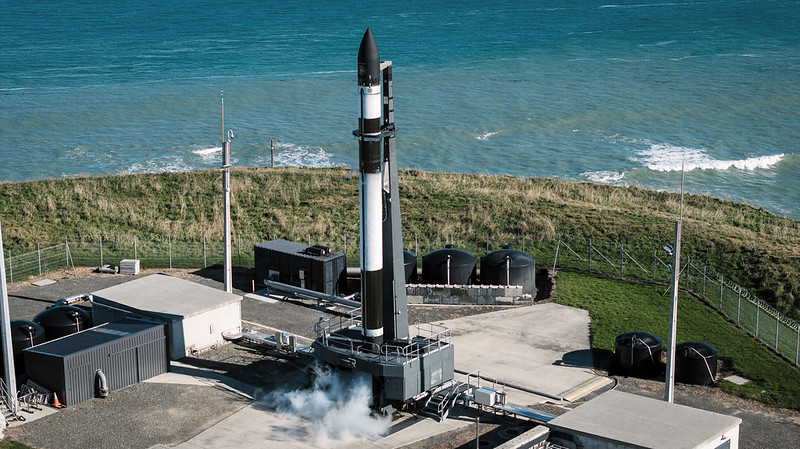
Satellites like these are used to map crop yields across the Midwest, track shipping traffic through the South China Sea, and monitor deforestation deep in the Amazon basin.
In the past, launching a satellite could easily cost hundreds of millions of dollars. The exact figure depended heavily on the size of the spacecraft and the launcher.
Today, the price of launching a kilogram of satellite equipment into low-Earth orbit has fallen into the low thousands of dollars. That’s thanks to reusable 3D printed boosters and automated manufacturing.
That plunging cost curve is why more than 250 rockets left Earth last year—about one every 34 hours—and why the number of active satellites has tripled over the last five years.
Each new launch adds another link in a growing orbital network: satellites that beam internet to rural villages, forecast weather for insurers, and carry encrypted data for the U.S. military and its rivals in China, Russia, and Europe.
Space is no longer a destination. It’s a new layer of infrastructure—a high-altitude extension of the digital economy made up of machines circling 300 miles above our heads.
But what makes these machines so powerful isn’t just their altitude—it’s how they coordinate with each other.
They form part of the communication backbone of the modern world—linking farms, fleets, aircraft, and financial networks through constant streams of data. Every GPS coordinate, weather model, navigation app, and satellite call depends on them.
And with AI systems parsing the billions of images and radio signals they collect, satellites have evolved from passive “eyes in the sky” into real-time analytical tools. They can pinpoint illegal mining in the Congo and detect early signs of drought across the American Midwest before anyone on the ground notices.
Satellites have also become the new high ground of modern defense. From missile detection and battlefield communications to tracking ships and aircraft across the globe, control of orbital networks defines military power as surely as control of the seas once did.
When Russia jammed Ukrainian GPS signals in 2022, it was Elon Musk’s Starlink communications satellites that kept Kyiv’s forces online—a reminder that tomorrow’s wars will be fought not only on land, sea, and air, but in orbit.
That’s why this new orbital network is such a rare opportunity for investors. For the first time since the dawn of the internet, a planet-spanning digital infrastructure is being built in real time—and unlike the space race in the 1950s and 1960s, it’s open to private capital.
Folks who recognize that shift early could see the same kind of windfall that semiconductors and the internet created on the ground. Early investors in past tech revolutions saw extraordinary gains.
By the early 1990s, Intel’s shares had risen roughly 300-fold since it went public in 1971—turning a $10,000 stake into about $3 million by the time personal computers went mainstream. And at its 2000 dot-com peak, Intel traded nearly 3,000 times its initial launch price.
And a $10,000 investment in Amazon’s 1997 go-public price grew to roughly $13 million two decades later. Today, its shares are about 11,600% higher. And that $10,000 stake would be worth roughly $1.2 million.
Each wave of infrastructure minted new millionaires. The same pattern is unfolding again.
The New Network Being Built Above Our Heads
Every major leap in civilization has been built on a new network infrastructure.
- In the 1800s, it was the railroads—hundreds of thousands of miles of steel track that connected the industrializing world.
- In the 1900s, it was the electrical grid and interstate highways. They paved the way for our modern era of mass production and global trade.
- And at the turn of the millennium, it was the fiber-optic cables that created the high-speed internet. Without it, neither the digital economy nor today’s AI boom would be possible.
Now, a new network is taking shape hundreds of miles overhead.
The global space economy—worth roughly $550 billion today and projected by McKinsey to reach $1.8 trillion by 2035—isn’t about sending astronauts to the Moon.
It’s about turning space into an extension of Earth’s infrastructure—a place where communication, computing, and surveillance now happen above our heads.
Several converging forces are catalyzing its growth:
- Reusable rockets have broken the cost curve.
In the 1990s, launching a kilogram of satellite equipment into low-Earth orbit typically cost about $10,000. Today, SpaceX’s reusable Falcon 9 can deliver the same payload for roughly $1,500–$2,000 per kilogram, thanks to boosters that fly, land, and fly again. That breakthrough in reusability has driven costs down by an order of magnitude and opened the door to a new commercial space economy.
- AI is changing what happens after those payloads reach orbit.
Modern satellites no longer just collect data—they’re beginning to analyze it in near real time. New generations of spacecraft, such as Planet’s upcoming SuperDoves, carry onboard processors that use AI to prioritize and compress imagery before it even reaches Earth.
On the ground, machine-learning algorithms now scan thousands of images and radar signals to detect drought stress in crops or traffic buildups at major ports—often hours or days before traditional monitoring systems would spot them.
- Government and private companies are teaming up
Facing competition from rivals overseas, U.S. agencies, defense contractors, telecom giants, and private startups are now collaborating on projects that once ran in isolation.
NASA hires private launch firms for crewed missions. The Pentagon rents bandwidth from commercial satellite networks. And the U.S. Space Force buys imagery and analytics from commercial firms to monitor global activity in near real-time.
This has accelerated investment. According to Seraphim Space, venture funding in space companies hit $10 billion in 2024.
Meanwhile, NASA’s annual budget is about $25 billion. And the U.S. Space Force—created just five years ago—now oversees $29 billion in programs for secure communications, missile tracking, and launch services.
Washington is throwing its weight behind private industry to maintain U.S. dominance in orbit. Space is one of the few areas where bipartisan support and heavy investment still align.
And it’s not just the U.S. government that is seizing the initiative. The European Union’s IRIS² program—a roughly $12 billion initiative—aims to build a sovereign broadband network much like Elon Musk’s Starlink.
And China’s Guowang satellite internet constellation is targeting 15,000 satellites by 2030.

This money isn’t chasing a single company or technology. It’s funding a full ecosystem: rockets, satellites, sensors, and the AI that ties them together.
And the returns are already visible here on Earth.
- Farmers use orbital imagery to plan irrigation.
- Insurers assess flood and wildfire risks in real-time.
- Airlines and cargo fleets reroute using live satellite data.
NASA and the Space Foundation estimate that the U.S. space sector today supports more than 370,000 jobs and contributes over $140 billion to domestic GDP.
But the global opportunity is far larger. According to McKinsey, the total space economy—valued at about $630 billion in 2023—could expand to roughly $1.8 trillion by 2035. This nearly three-fold increase will be driven by reusable launch systems, satellite broadband networks, and data-driven services that link space and AI.
In past industrial booms, people who spotted the new infrastructure before it became essential made fortunes. Right now, a new kind of infrastructure is coming together in orbit—built piece by piece by companies that anyone can now invest in.
In the pages ahead, we’ll look at six companies building the backbone of this emerging economy. These include:
- Launch and propulsion innovators
- Communications networks bringing internet and data coverage to every corner of the globe.
- Observation and data firms turning raw imagery into usable intelligence.
- And the AI engines that connect it all.
Together, they’re wiring up a new orbital economy. And just like Cisco’s fiber-optic buildout paid off a thousand-to-one for early investors, these companies could hand out the same kind of life-changing gains.
1. Launch and Propulsion: The Companies Making Orbit Routine
The Space Age began in 1957, when the Soviet Union launched Sputnik1, the first artificial satellite. It sent a single radio beep from orbit—and signaled the beginning of a new era.
For most of the time since then, launching a satellite was like buying a one-way flight. Rockets were built once, fired once, and then discarded into the ocean. That model made every mission an expensive gamble. It also left smaller players locked out.
Then came the shift to reusable and modular launch systems. SpaceX proved the idea by successfully landing its Falcon 9 boosters more than 300 times and re-flying them on hundreds of missions—cutting launch costs by roughly 80% compared with the expendable rockets of the 1990s

But the real transformation is happening one tier down. Smaller firms are building rockets for a different market—lightweight satellites that need quick, affordable rides to orbit.
Rocket Lab (RKLB)
From its twin launch sites in New Zealand’s Mahia Peninsula and Cape Canaveral, Rocket Lab is steadily becoming the FedEx of low-Earth orbit.
Rocket Lab’s Electron rocket is compact enough to fit inside a city bus—18 meters tall—but powerful enough to carry up to 320 kilograms (about the weight of a grand piano) into orbit.
Since its debut in 2017, Electron has completed more than 50 launches, carrying payloads for NASA, the U.S. Space Force, and leading commercial imaging firms.
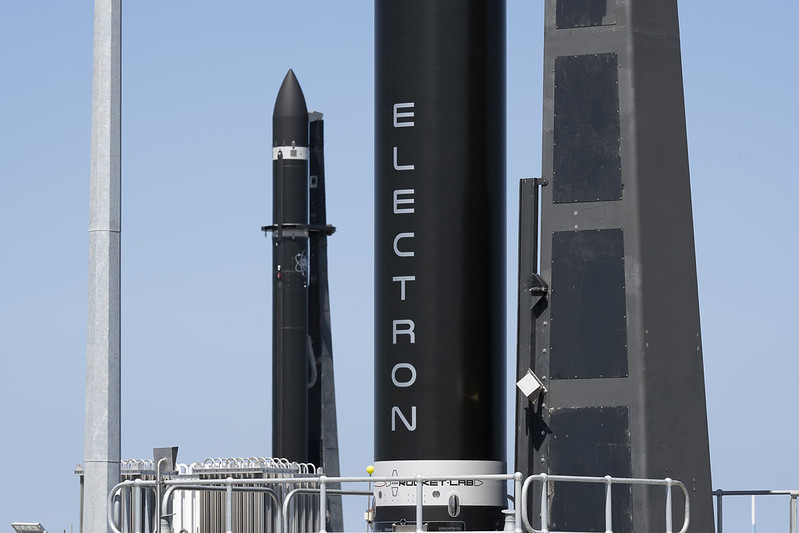
The company is now scaling up its next launch vehicle, Neutron. It’s designed to carry larger payloads and return to Earth intact.

Each new launch adds to Rocket Lab’s reputation as the dependable small-rocket provider—a niche that major aerospace firms struggle to serve profitably.
What makes Rocket Lab especially interesting for investors isn’t just its reliability. It’s the vertical integration. The company doesn’t just launch satellites—it also builds them.
Rocket Lab’s Photon is a small spacecraft that carries a customer’s equipment once it’s in orbit—cameras, sensors, radios, whatever needs to run. Think of it as the chassis and wiring of a car. The customer brings the parts that make it unique, and Rocket Lab handles everything else.
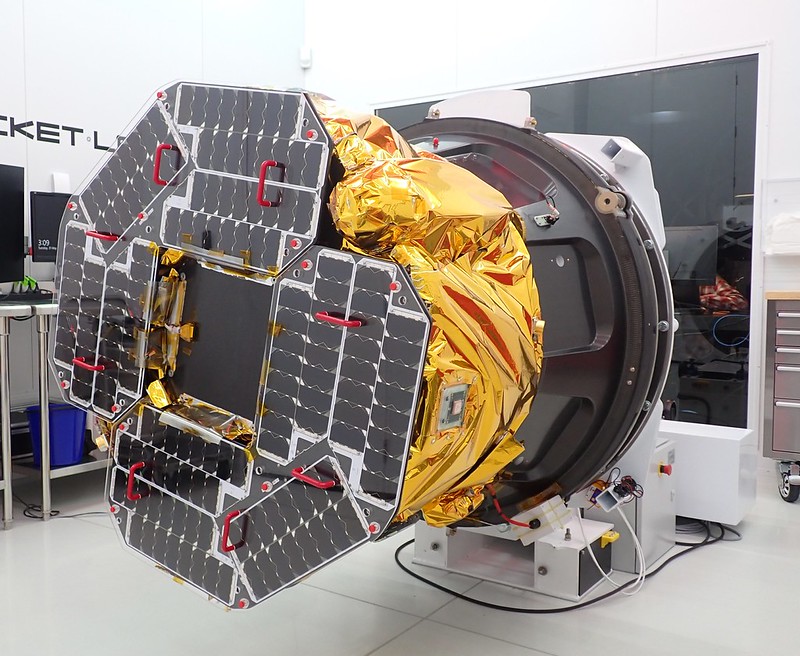
That shortcut saves years of design and testing. In 2022, a Photon carried NASA’s CAPSTONE probe on its way to the Moon. This proved the same system can handle deep-space work as well as low-Earth orbit.
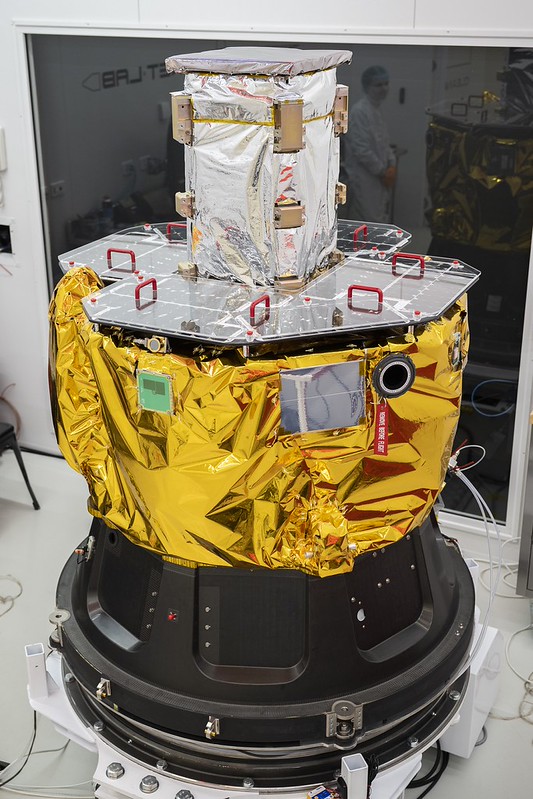
Like how railroads companies once controlled both the tracks and the trains that ran on them, Rocket Lab is now positioned as a hardware manufacturer and service provider.
Karman Space & Defense (KARMN)
If Rocket Lab handles the express routes to orbit, Karman Space & Defense builds the engines that make those routes possible.
The California-based firm is behind some of America’s most advanced launch and defense programs. Rocket Lab’s propulsion systems now power everything from orbital launchers to hypersonic test vehicles and next-generation reusable spacecraft. Its HASTE program—a modified Electron rocket used for U.S. defense testing—has achieved speeds above Mach 5, fast enough to cross the continental United States in under an hour.
Karman’s edge lies in precision engineering. Using additive 3D-printing and advanced nickel and titanium alloys, the company can custom build nozzles, thrusters, and structural components in weeks instead of months—a turnaround that gives its clients a decisive speed advantage in both launch and defense projects.
That speed matters when the Pentagon or NASA needs a replacement engine—or when a commercial launcher wants to pivot from prototype to production.
Karman’s hardware is already flying on systems built by NASA, the U.S. Department of Defense, and leading private launch firms including Rocket Lab, Relativity Space, and Firefly Aerospace.
Inside aerospace circles, Karman has a reputation for reliability: engines that light the first time, run clean, and can be inspected, rebuilt, and fired again.
That dependability is paying off. With new investment from AE Industrial Partners and a growing backlog of defense work, the company is expanding capacity at its Oxnard and Mojave facilities in Southern California, near the heart of America’s aerospace belt.
Oxnard, northwest of Los Angeles, handles precision machining and assembly work. Mojave—a high-desert airfield known for experimental test flights—is where Karman builds and tests its propulsion systems.
The location gives the company direct access to NASA’s Armstrong Flight Research Center and the Air Force’s Edwards testing range, two of the busiest aerospace corridors in the country.
It’s all part of a broader national push to bring more propulsion manufacturing back onshore and cut reliance on overseas suppliers.
Karman isn’t a household name. But it’s quickly becoming a cornerstone of America’s propulsion supply chain—a behind-the-scenes contractor that keeps the orbital economy running on time.
Why It Matters
Launch and propulsion are the gateways to the orbital economy. Every satellite, telescope, and probe begins its life at the end of a rocket engine.
The companies that can deliver those payloads more often—and for less—stand to profit as this new economy gets built out.
But in the 19th century, investors who backed the railroads didn’t just make money from trains. They also profited from everything that followed—steel, real estate, communication lines, and trade routes.
2. Communications and Connectivity: The Web Above the World
Before a satellite can capture data or beam down insight, it has to send a signal home.
That’s the job of the orbital networks taking shape hundreds of miles above us. This wireless grid keeps everything else in the space economy connected.
Satellites now do the same job that fiber-optic cables and cell towers do on Earth. They’re moving data, phone calls, and images around the world in real time.
They carry everything from airline Wi-Fi to military encryption keys, weather data, and financial transactions. When a fiber-optic cable is cut or a cell tower goes dark, these links keep the world online.
Low-Earth orbit networks also do what terrestrial systems can’t: connect the rest of the planet. Right now, nearly 3 billion people still lack reliable internet access. The economics just don’t make sense.
Telecom companies spend billions building networks in cities where customers are dense and profitable, but remote regions never see that investment.
Satellites fill that gap. For many millions of people, the first signal they’ll ever receive will come not from a cell tower—but from a satellite.
It’s a fast-moving race. More than 7 million people worldwide now rely on satellite broadband—a number that has surged in recent years as constellations such as Starlink, Viasat, and OneWeb expanded global coverage. And industry forecasts indicate that the number of satellite-broadband users could more than double over the next five years.
Governments are subsidizing rural connections. Telecom companies are racing to integrate satellite coverage into their plans. And big tech firms like Amazon (Project Kuiper) and SpaceX (Starlink) are fighting to dominate orbital bandwidth.
In the middle of all this, two companies stand out—one for its innovation, and the other for its scale.
AST SpaceMobile (ASTS)
AST SpaceMobile is building giant folding satellites that unfurl in orbit like solar sails. Each one roughly the size of a football field once deployed.
Instead of relaying signals between towers, these satellites talk directly to ordinary smartphones.
In 2023, AST SpaceMobile’s BlueWalker 3 satellite made the first voice-call from space using a standard Samsung handset—marking the first direct voice connection between a satellite and an unmodified smartphone.
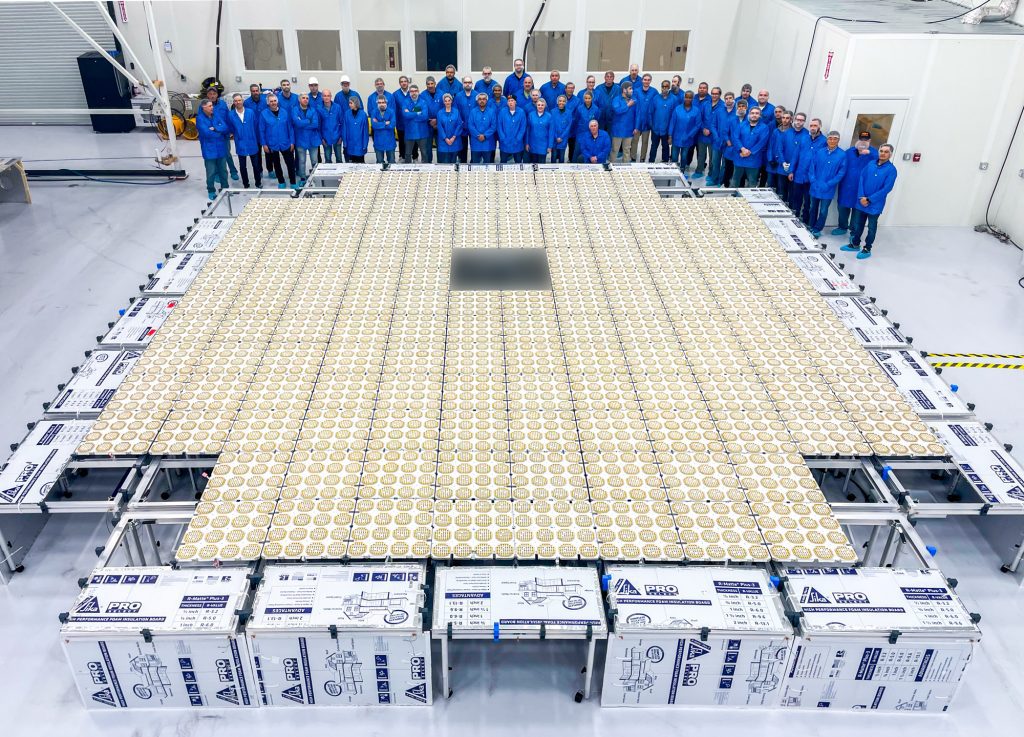
No ground towers. No specialized gear. Just a phone and open sky. That breakthrough means coverage in the 40% of the world that traditional cell networks still miss—oceans, deserts, mountain ranges, and vast rural zones.
This is not a science project or a scene from a James Bond movie. It’s a fast-emerging commercial reality. Major telecom players—including AT&T, Vodafone, Rakuten, and Orange—have already signed partnership deals, with more in line.
If AST can scale its network, it could turn every phone on Earth into a satellite phone—and upend the entire global telecom model in the process.
Viasat (VSAT)
Viasat takes the opposite approach.
Instead of building thousands of small satellites in low orbit, it operates a handful of high-capacity geostationary satellites parked 22,000 miles above Earth—each one covering a third of the planet.
Its newest craft, ViaSat-3 F2, is slated to deliver more than 1 terabit per second of throughput over the Americas, positioning it as one of the highest-capacity broadband satellites built. That’s enough bandwidth to support millions of simultaneous users—from commercial jets and cargo ships to U.S. military units and remote mining operations on land and sea.
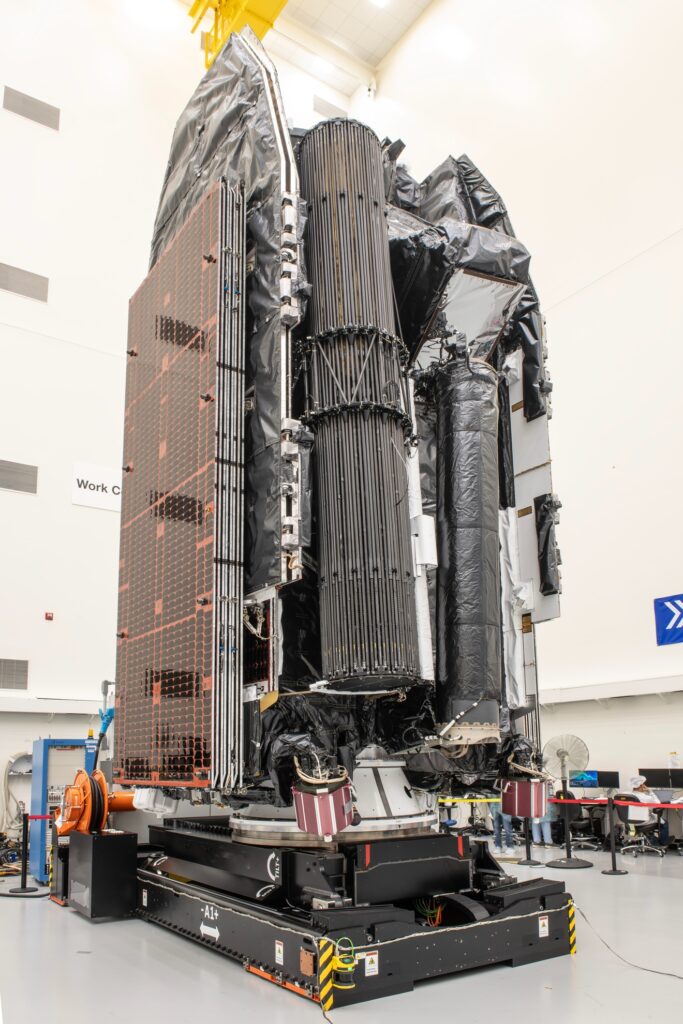
Viasat’s clients include the U.S. Department of Defense, commercial airlines, NATO fleets, and global broadband providers. And because these contracts stretch for years at a time, Viasat enjoys the kind of recurring revenue streams that make it behave more like a utility than a tech stock.
When its full three-satellite ViaSat-3 constellation is active by 2026, it will blanket the globe with high-speed coverage—giving the company a direct competitive line against Starlink and Amazon’s Kuiper.
Why It Matters
Every major network in history has gone through the same sequence: first, transportation, then communication.
- The railroads were followed by the telegraph: Operators strung wires along the same routes, so news could travel as fast as the trains that moved the mail.
- The highways gave rise to the telephone: As the highway system spread, utility crews ran phone and power lines along the same routes
- Now, the launch economy is giving rise to an orbital internet: A network that will carry the data traffic of the next century.
And the payoffs are real.
- Farmers will use satellite connectivity to monitor soil and weather in real time.
- Doctors will treat patients in remote villages with live telemedicine sessions.
- Cargo fleets will cross oceans without losing a signal for a single second.
That’s why satellite communications are drawing the kind of long-term contracts once reserved for utilities.
In the 1990s, it was fiber-optic cable that rewired the world. Now, it’s happening again—only this time in orbit.
3. Observation and Intelligence: Seeing the World in Real Time
First you need rockets to reach orbit. Then you need networks to stay connected. These next firms focus on what really matters—what those satellites actually see and measure.
Every few minutes, hundreds of satellites circle the planet, snapping high-resolution photos, taking radar readings, and measuring everything from ocean currents to methane leaks.
Until a few years ago, most of that data sat in a government archive. Now, it’s available by subscription—and it’s changing how companies, insurers, and even militaries make decisions.
The result is an entirely new kind of global awareness.
- Farmers can map soil moisture before planting.
- Energy firms can spot leaks before they trigger fines.
- And when a hurricane hits, insurers can price losses in hours instead of weeks.
This is the business of orbital intelligence—one of the fastest-growing parts of the space economy.
Planet Labs (PL)
Planet Labs operates the largest Earth-imaging fleet in history—more than 450 active satellites that photograph the planet’s entire landmass every 24 hours. Each shoebox-sized satellite contributes to a stream of more than 25 terabytes of new imagery every day, providing near-real-time visibility of global change.
Traditional government satellites might revisit the same spot once every few weeks. Planet Lab’s constellation catches changes as they happen—construction in Dubai, drought creeping across the Midwest, or a new factory roof appearing on the outskirts of Chengdu, China.
The company’s customers span from German drugmaker Bayer and French insurance giant AXA to national agencies such as Britain’s Rural Payments Agency and the Kazakhstan Space Agency.
In 2025, Planet Labs won a $12.8 million contract from the U.S. National Geospatial-Intelligence Agency to supply daily maritime surveillance imagery—proof that commercial satellite data has become mission-critical for government intelligence.
Planet Labs is now developing two new fleets—Pelican, its next-generation high-resolution constellation, and Owl, designed for night-time imaging.
Together, they’ll capture sub-meter detail and refresh global imagery within hours, bringing analysts closer to what Planet Lab’s CEO calls “a searchable index of change on Earth.” Some on Wall Street have dubbed it nothing less than a “Bloomberg Terminal for Earth.”
That dataset is already feeding AI systems that predict crop yields, track supply chains, and model climate risk. And the company’s Berlin facility now builds satellites at an industrial pace, showing how orbital imaging has become less science fiction and more manufacturing.
Why It Matters
The world runs on data, and satellites are now its most reliable source.
And imagery and sensory data from space show us what’s growing, shipping, melting, or breaking down.
As more sectors subscribe to live Earth data, companies like Planet Labs will move from niche providers to essential utilities of a new phase of Information Age.
4. AI and Data: The Ground Crew Turning Signals into Intelligence
Every hour, satellites beam down oceans of data—images, coordinates, weather readings, radio chatter.
None of it means much until something on Earth can turn it into insight.
That work happens inside the world’s data centers—where AI algorithms analyze, tag, and interpret the flood of information coming in from orbit. Without them, we couldn’t convert the raw sensor data into usable intelligence for defense, agriculture, logistics, and finance.
Astera Labs (ALAB)
Astera isn’t building spacecraft. It’s building the high-speed wiring that keeps those AI “brains” running at full power.
Inside modern data centers, billions of bits move between chips every second. A delay of even a few milliseconds can choke performance across thousands of servers.
Astera’s specialty is eliminating that bottleneck. Its CXL and PCIe 6.0 interconnects let GPUs and CPUs share memory as if they were a single processor—dramatically speeding up model training and inference.
Those faster links matter.
Training an AI model to read satellite imagery of the Amazon or radar scans over the Black Sea can take weeks of nonstop computation. Astera’s tech helps cloud and AI systems move data faster and “think” quicker. Jobs that used to take hours—or even days—now get done in a fraction of the time.
Major cloud operators and AI hardware makers are already using its COSMOS platform and Intelligent Connectivity Processing (ICP) chips to keep data moving at peak efficiency.
The company also partners with chipmaker Arm Holdings through its Total Design program. Its focused on developing the next generation of AI-optimized servers built specifically for workloads that digest space-borne data in real time.
It’s another critical piece of the orbital economy. Every new satellite adds more data. Astera ensures it doesn’t get stuck in digital traffic and becomes usable, actionable, and valuable instead.
Why It Matters
AI is the interpreter between data from space and humans on Earth.
Every day, orbiting satellites send billions of unfiltered signals into real-world decisions—where to plant, where to ship, when to defend.
Put it all together and you’ve got the start of something big—a fully connected planet that can sense, think, and react to everything from crop failures to missile launches, almost in real time.
The Bottom Line
Every time a new network takes shape, the biggest gains go to the people who spot it early.
The story never really changes—only the terrain.
Railroads made continents feel smaller. Undersea fiber-optic cables did the same for the whole planet. Now, satellites are linking the planet from above—and a new window of opportunity has opened.
The orbital economy remains off most mainstream investors’ radars. But it’s already part of everyday life—moving our data, watching for extreme weather, and keeping global trade on track.
And like the early internet, most people won’t notice how vital it is until it’s everywhere. By then, the biggest profits will be long gone to those who saw it coming.
By Keith Kaplan
CEO, TradeSmith