A $400 Billion Problem Could Be Your Next Big Opportunity
Listen to the audio version of this article (generated by AI).
Michael’s note: Regular readers of TradeSmith Daily might be familiar with the name Marc Chaikin.
He’s a 60-year investing veteran, founder of Chaikin Analytics, and the brains behind the Power Gauge – his 21-factor stock rating system – along with technical tools that are mainstays on professional investing platforms.
Right now, Marc’s sharing details about a new system that helps you foresee the biggest potential earnings beats across the top AI stocks in the market. And he’s allowing limited-time access for TradeSmith Daily readers.
Click here to try it out on 5,000+ different stocks and read on below to hear from Joe Austin on a critical factor in the biotech boom that most investors are missing…
If you think AI is the only gold rush on Wall Street these days, think again…
Big Pharma companies are in a lesser-understood gold rush of their own. And none of it has anything to do with data centers or chatbots.
It’s called a “patent cliff.” That’s when a drug’s patent protection runs out and copycat drugs flood the market.
Between 2026 and 2030, drugmakers will face the largest patent cliff in the industry’s history. Around $236 billion in global sales are at risk.
But it doesn’t stop there. New Medicare pricing rules are making this cliff even steeper.
The Inflation Reduction Act, passed in 2022, lets Medicare negotiate drug prices years before patents even expire. Add that to the mix, and the “cliff” could be as high as $400 billion.
All told, by 2030, this pattern will have hit 190 drugs. And 69 of these are “blockbusters” – meaning they bring in more than $1 billion a year.
For investors, that kind of pressure means one thing. This presents a chance to profit from the coming wave of mergers and acquisitions.
Major drug companies don’t sit still and watch billions in sales disappear…
They go shopping. And that buying spree could be where the real money gets made.
We’ve actually seen this play out before. The last big patent cliff, between 2011 and 2015, turned into one of the best stretches biotech stocks have ever had.
Two major biotech funds, the State Street SPDR S&P Biotech Fund (XBI) and the iShares Biotechnology Fund (IBB), gained about 180% during that period. That works out to roughly 30% a year, on average, across five years.
The State Street SPDR S&P Pharmaceuticals Fund (XPH) didn’t do too badly, either. It gained about 70% total, or roughly 14% a year.
The AI trade has everyone’s attention right now. But biotech is worth watching too…
Three Ways to Play the Patent Cliff
Because of patent expirations, brand-name drugs lose between $20 billion and $80 billion in sales every year. Once the patent runs out, the original drugmaker typically sees 80% to 90% of its market share vanish within a year.
And when lots of blockbuster drugs go off patent, the losses can pile up.
Last time around, drug companies lost about $255 billion in sales.
If you’re a drug company, that’s a genuine problem. But for investors…
It’s a once-in-a-decade opportunity.
Per Ernst & Young, biopharma companies had an estimated $2.1 trillion ready to spend on deals as of this January. That included cash in the bank, money they could borrow, and the value of their stock.
And the mergers-and-acquisitions wave is already underway. In the first half of this year, life sciences companies signed about $196 billion in deals. That’s up 140% versus the first half of 2025.
I see three ways to play this trend.
1. Buy Individual Stocks
There are another four companies in the Life Sciences Tools and Services industry that have a “very bullish” rating.
This is a fine strategy, but it puts the burden on you to pick the winners. That’s a tall order if you don’t have industry expertise.
2. Buy a Broad Pharma or Biotech ETF
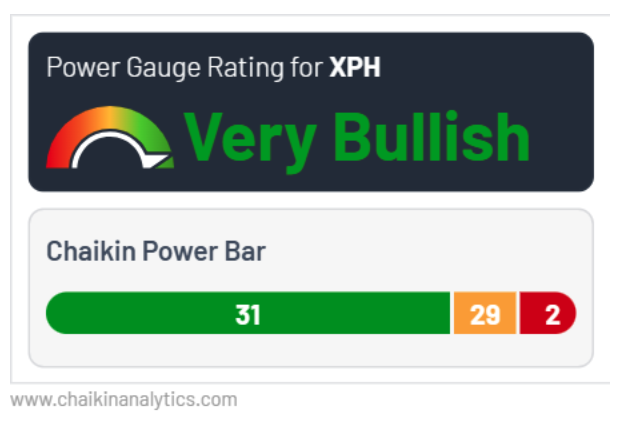
To start, our system rates XPH “very bullish.” You can see the breakdown here…
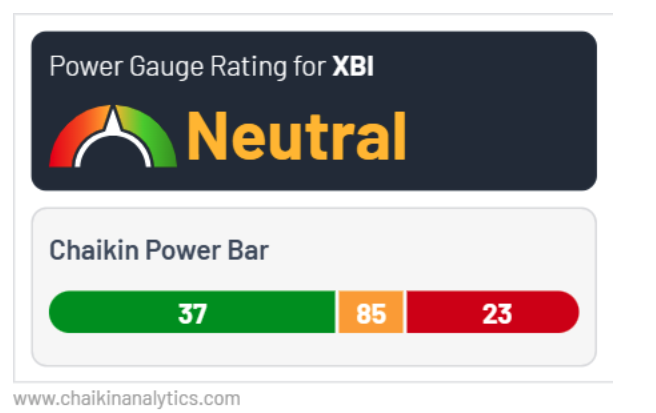
The Power Gauge gives XBI a “neutral” rating. Check out the ratings breakdown of the stocks in this ETF…
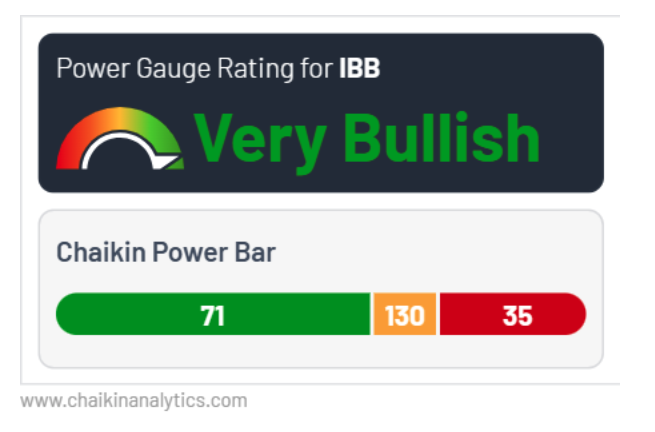
Last is IBB. Our system also gives this ETF a “very bullish” rating. And as with the other two ETFs, more than half of the holdings here are “neutral” or better…
Buying broad indexes like this is a fine strategy, too. But doing that exposes you to the whole industry. That means you’ll end up owning both the winners and the losers.
3. Buy an Actively Managed Biotech or Pharmaceutical ETF
Here’s how I think about it. I’ve always felt that biotech and drug companies are like regional banks…
In both industries, a little expertise goes a long way. Handing your money to an active manager means a real person is picking the stocks.
That’s no guarantee of success. But in an industry like biotech, it can stack the odds in your favor.
I ran a quick Internet search for 15 of the largest biotech-focused actively managed ETFs. I then checked what the Power Gauge had to say about each one.
Twelve had “bullish” or better overall ratings, and 10 scored “bullish” or better on technical trends.
The bottom line: Across these strategies, our Power Gauge is flashing some positive signals.
Remember that AI isn’t the only game in town. The last patent cliff turned out to be a moneymaker for investors, and this one looks to be even bigger.
So by all means… keep an eye on the AI trade. But pay attention to the patent cliff as well.
Good investing,
Joe Austin