


The pictures are stunning.
Americans lined up in cars at gas stations. Families filling up 5-gallon gas cans and stuffing them into their SUV trunks.
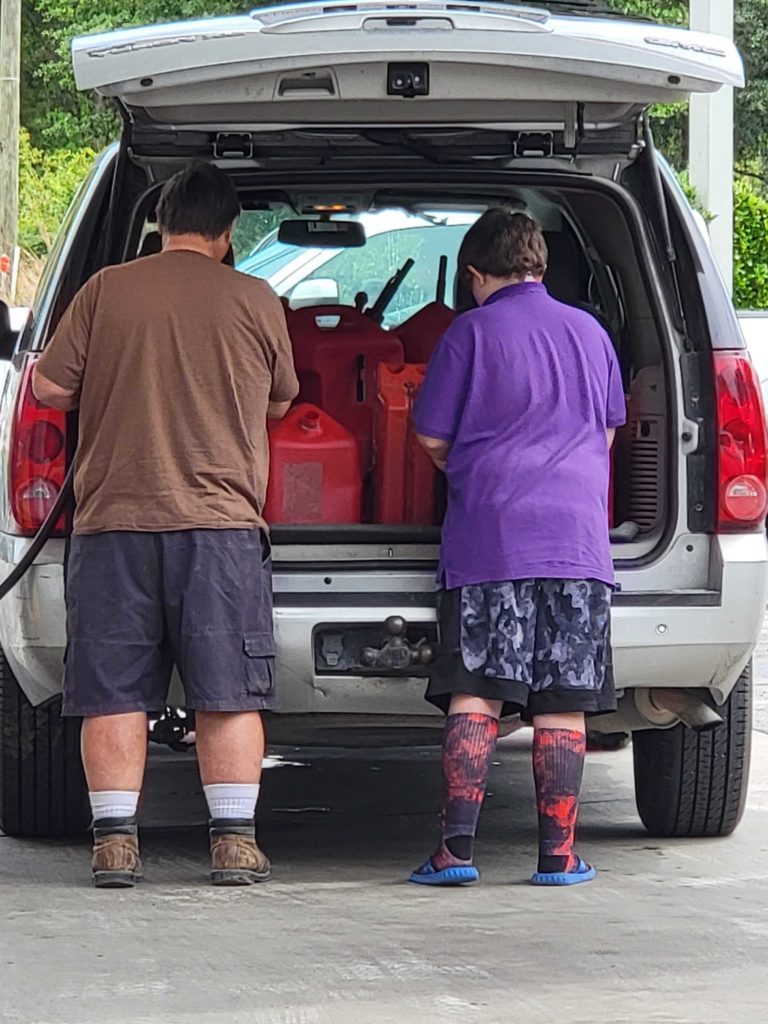
Some people are even trying to carry off the gasoline in trash bags and plastic bins.
Let me repeat this, as I saw the video with my own eyes …
There were people putting gasoline into plastic bags, trash bags, tote bins, etc.
It was the most dangerous thing I’ve ever seen. I mean, people are sloshing explosive materials in their cars and homes.
That won’t end well.
This was yesterday, in 2021. I’m not recanting the events from the 1973 OPEC oil crisis.
This is happening right now along the East Coast of the United States.
A cybersecurity attack on the 5,500-mile Colonial Pipeline disrupted the supply chain and flow of driving and jet fuels across multiple states.
Some gas stations started running out of gasoline. In a week when we’ve learned about shortages of corn, chicken, semiconductors, truckers, ketchup packets, and other products, gasoline started a real panic.
Americans started hoarding gas like they did toilet paper at the onset of COVID-19.
And the online memes repeatedly referenced the film Mad Max, which centers around a dystopian world where warring gangs fight over limited fuel.
I’m not getting caught up in the hype. I haven’t panic-purchased gasoline. With the pipeline coming back online this week, the shortages will clear up.
Instead, I am focusing on why this event happened.
Then, as a buy-and-hold investor, I want you to understand why one industry creates incredible opportunities for us.
Here’s the Skinny on the Hack
Why did it happen in the first place? At first glance, one might assume that foreign actors are attempting to shut down parts of the U.S. energy grid to disrupt the economy.
That’s typically a good guess in a world that now focuses on cyberwarfare.
And the White House denies Russian hackers are responsible for this event.
Sometimes the simplest explanation is the real reason why hackers attacked this pipeline.
They want money.
The cyberattack likely didn’t aim to disable the pipeline permanently.
A criminal group known as DarkSide engaged in what we now know was a “ransomware attack.”
A ransomware attack works like this.
A hacker attacks a device or network with malware. They might do so by sending an infected or spoofed email to an unsuspecting person at a company.
This malware then encrypts or locks files on the system. The attack makes the system inoperable, and all of the data on the network is inaccessible.
The hacker then demands a ransom – typically Bitcoin or another cryptocurrency – in exchange for releasing the data. The victim pays the fee to receive a key that will decrypt the compromised data.
This practice is now extremely common in today’s digital world.
A Hacker’s Paradise
Neil Chatterjee, a commissioner on the Federal Energy Regulatory Commission, called this week’s attack on the Colonial Pipeline a “wake-up call.”
But anyone who has paid attention to this threat has known about this ransomware practice for years. The Tennessee Valley Authority, the nation’s largest publicly owned utility firm, checked one billion cyber threats… each day… in 2019.
One single, successful attack could be the difference in maintaining power service to 153 power companies and more than 10 million people in Tennessee.
But it’s not just the power grid that has been ripe for attack.
Hackers have locked out entire towns and cities from critical networks.
In Baltimore, where some of our offices are located, hackers attacked the city’s servers and demanded 13 Bitcoin in exchange for the passwords to restore them. During the period that Baltimore’s systems remained down, real estate agents could not complete property transfers. The city also couldn’t issue water bills to citizens with its payment system compromised.
Baltimore ultimately paid the ransom.
Even my children’s school system was hacked, and they couldn’t use their devices for months during virtual learning.
These things are a mess and wreak havoc on society.
Similar attacks have hit Greensville, N.C., and Atlanta.
Then there’s another growing target.
The growing victims of these attacks have been small-business owners across the United States. Especially those with lots of customers and relevant data they need to make a sale.
For example, think about owning a car dealership and having all of your customers’ records locked out. Since many people don’t make copies of their data, they are prime targets for ransomware attacks.
Big companies, government agencies, and small businesses are all highly susceptible.
It only takes one spoofed email or piece of malware to infect an entire network.
And it’s becoming more costly than ever. The Department of Homeland Security’s Cybersecurity and Infrastructure Security Agency put a price tag on ransomware attacks in 2020. All told, hackers received more than $350 million in ransom payouts in 2020.
The Takeaway
There are two critical takeaways from this event. First, the decentralization of Bitcoin – typically the ransom of choice– can face more regulatory scrutiny.
Because Bitcoin remains anonymous, there is little way to identify the recipient after a ransomware attack. When events like this happen, the anonymity of the payment can draw sharp responses from regulators and cryptocurrency critics.
But there’s a much bigger trend at play. Cybersecurity remains the backbone of the U.S. economy in the 21st century. In boom times and downtimes for the economy, spending on cybersecurity will increasingly grow.
President Joe Biden has announced an all-government response to enhancing cybersecurity. That will require not only the deployment of government agencies, but also significant capital allocation to the industry.
The government can’t address this alone. It will take dozens of publicly traded companies in cyberspace to identify new threats and protect the U.S. economy, power grids, and other critical infrastructure.
We’ll discuss a few of the companies that are leading that charge in the days ahead.
In the meantime, be safe out there. Please don’t put gasoline into anything other than your car’s gas tank or an approved storage container meant for that purpose – the kind you’d use to fill up your lawn mower.


